What AI chips take
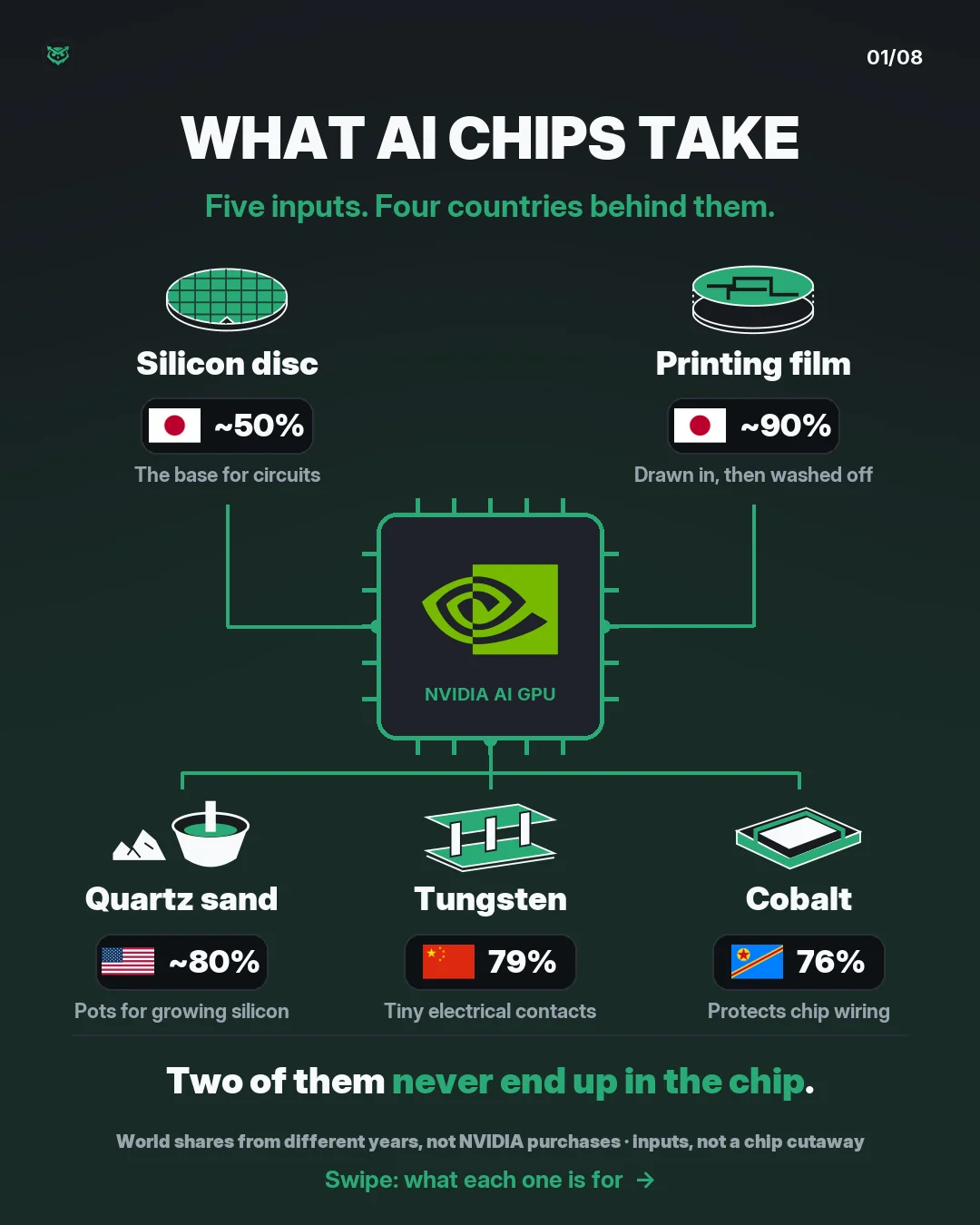
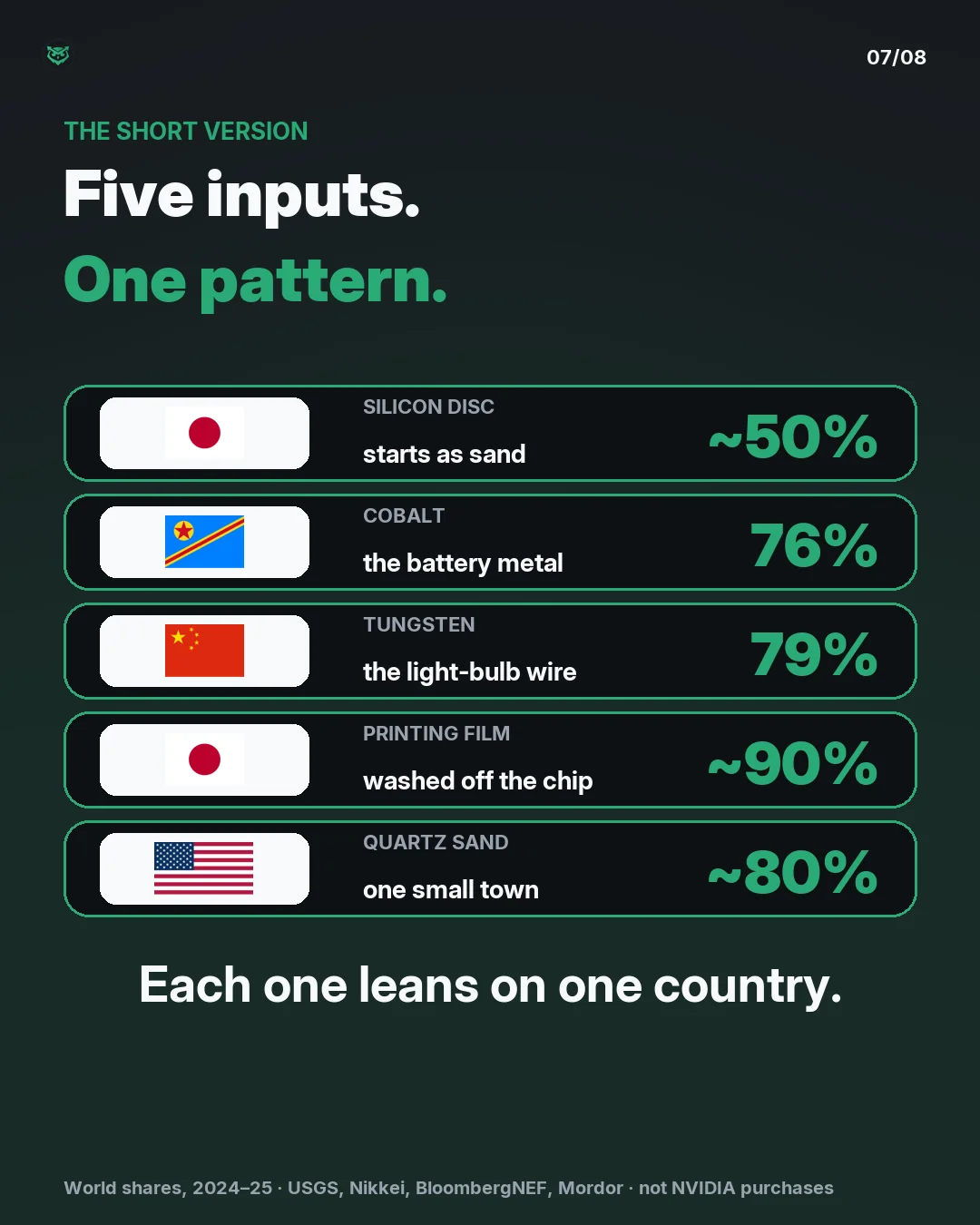
AI chips depend on more than silicon. Five manufacturing inputs lead to four countries, not just China.
The full story

Which input would you have guessed wrong?
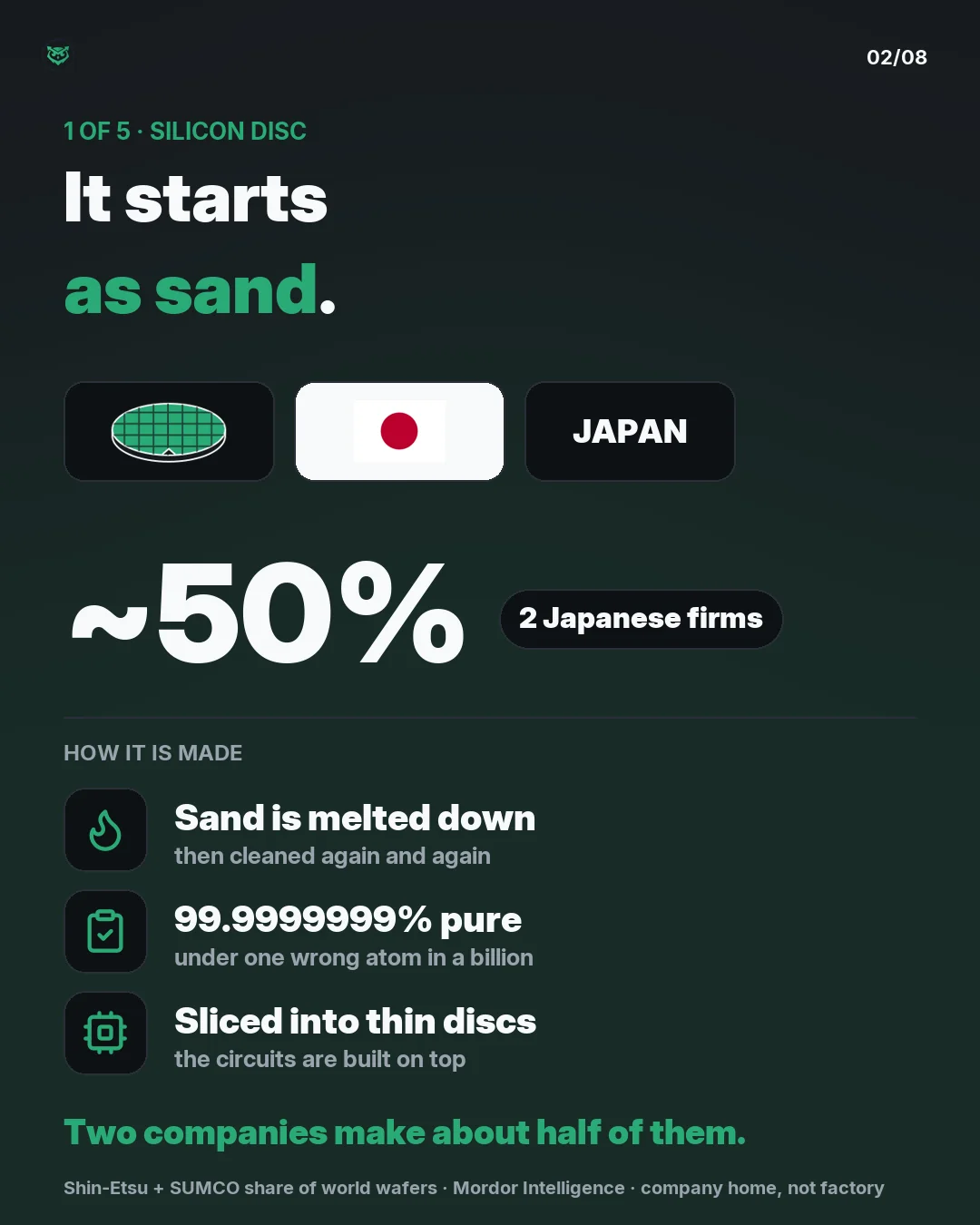
Japan's Shin-Etsu and SUMCO supply about half of the world's silicon wafers, the discs circuits are built on (Mordor). Company nationality, not factory location.
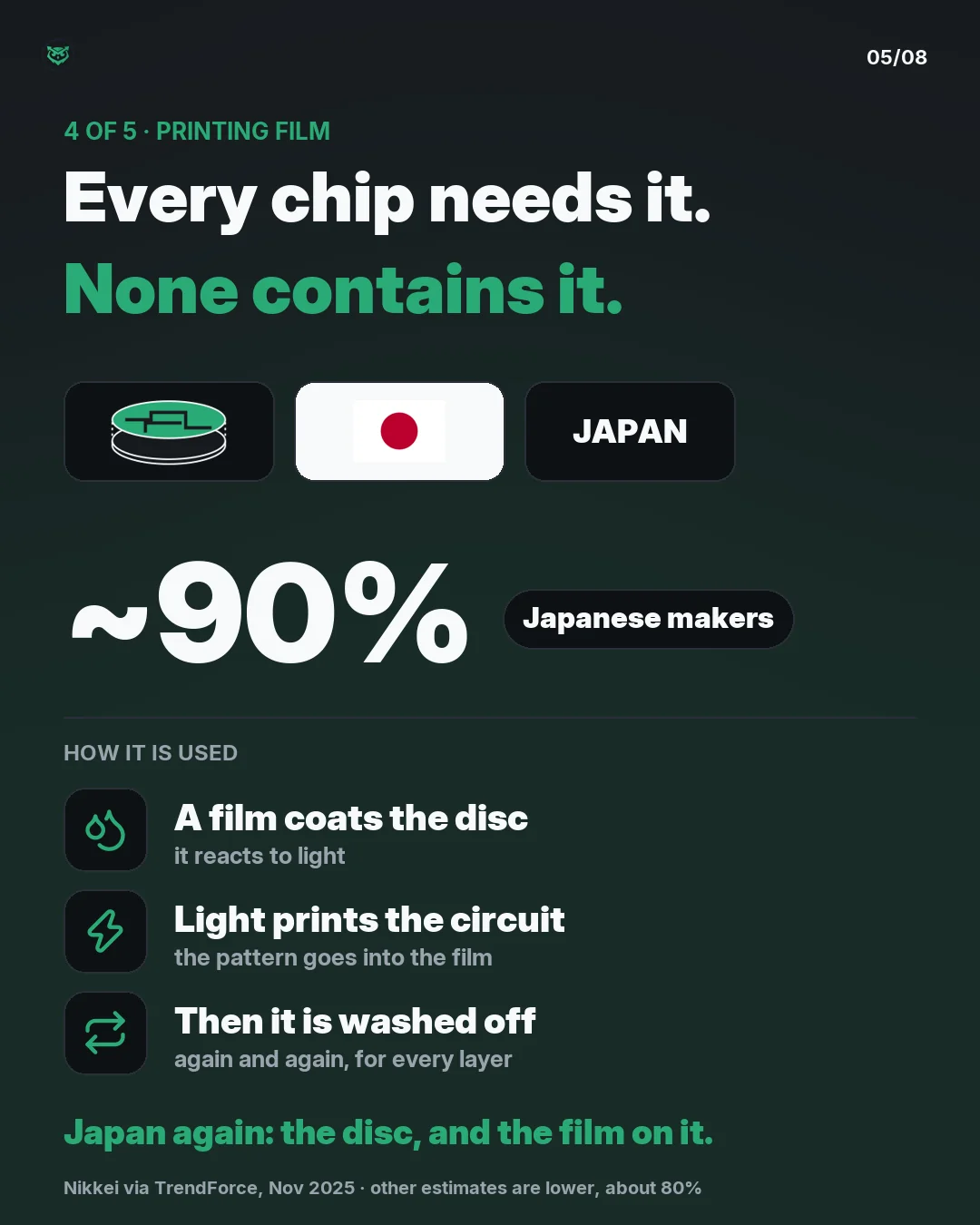
Japanese makers held about 90% of the photoresist market in Nikkei reporting carried by TrendForce in November 2025. Other reports give lower estimates. This light-sensitive printing film is washed off.
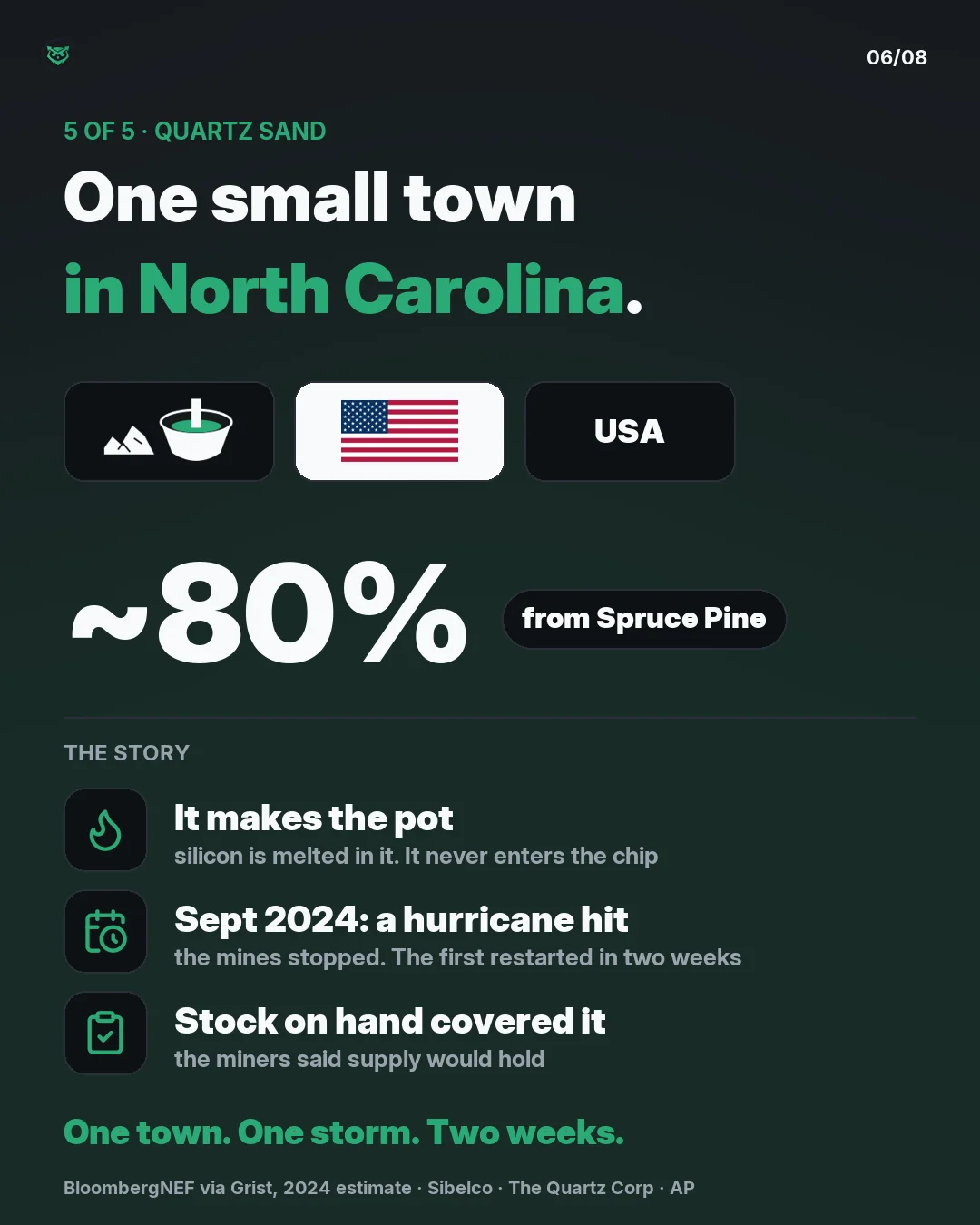
Spruce Pine, North Carolina supplied about 80% of ultra-pure quartz sand in a 2024 BloombergNEF estimate reported by Grist. It makes pots for growing silicon, not a layer inside the chip.
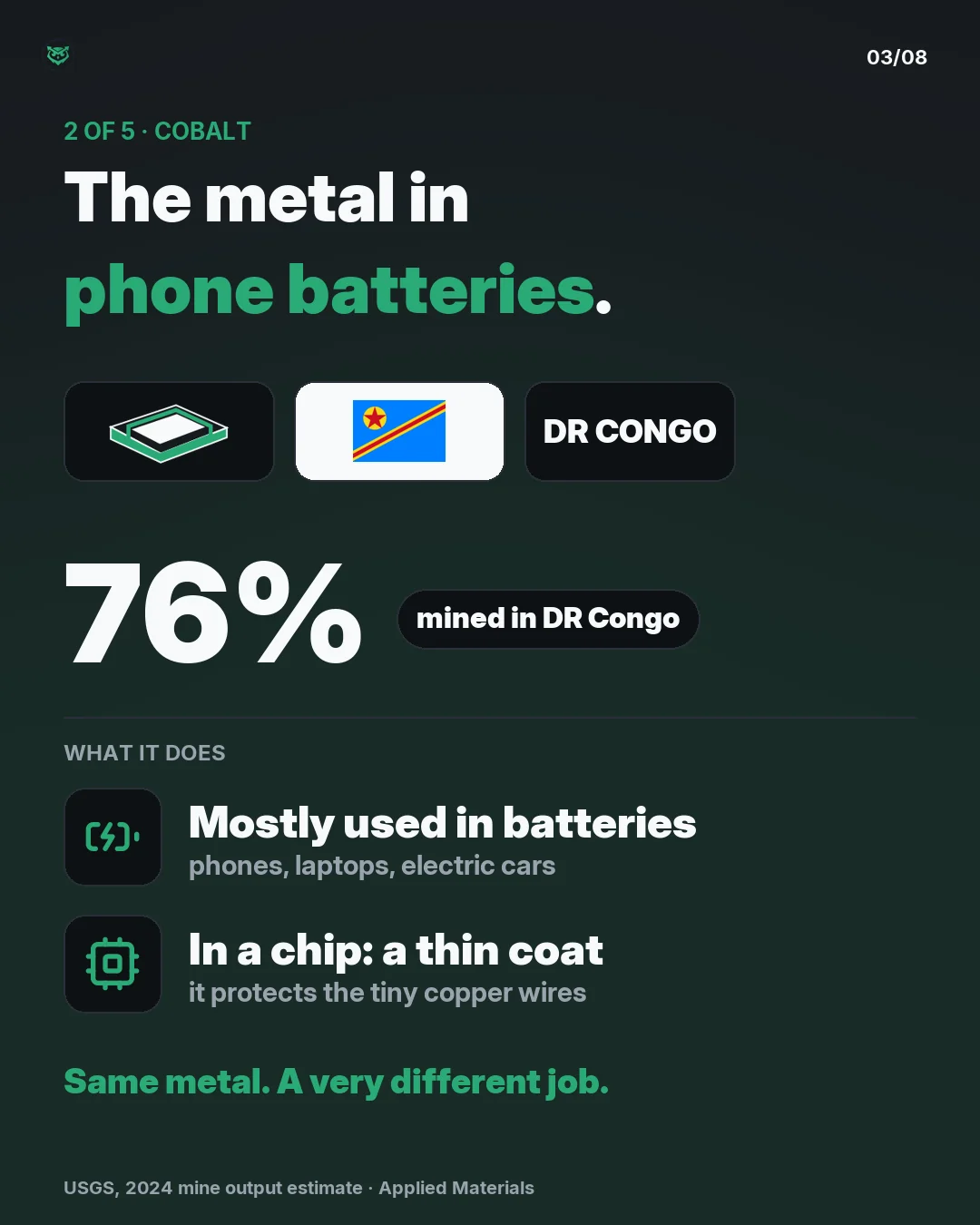
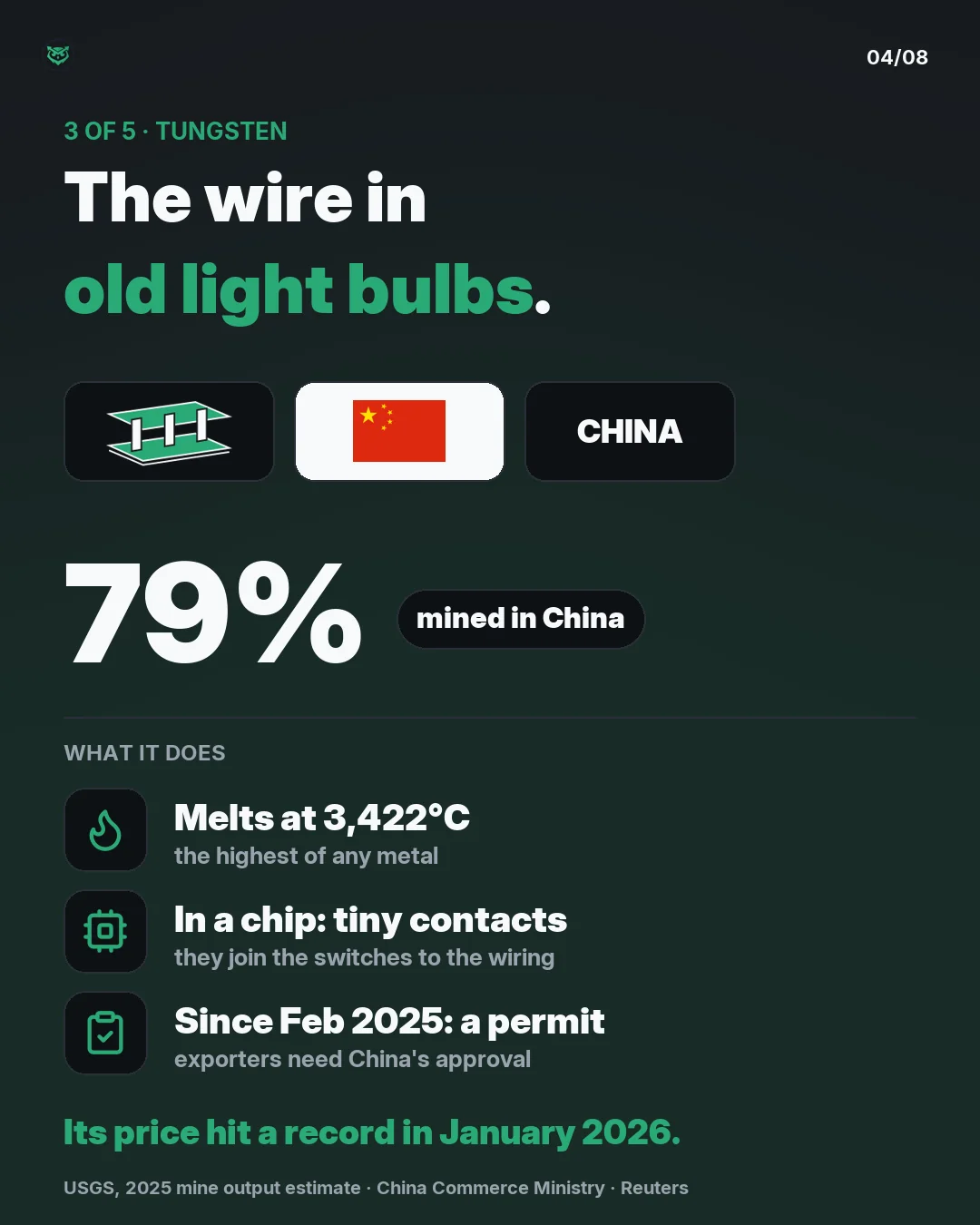
China mined 79% of world tungsten in 2025; DR Congo mined 76% of cobalt in 2024 (USGS estimates). Tungsten forms tiny contacts; cobalt can protect copper wiring.
These mix supplier market shares, quartz supply and mining from different dates, not NVIDIA's purchases. Flags identify the companies' home country or material origin as stated. Sources are not exclusive.
Illustrative manufacturing inputs, not a verified parts list for a specific NVIDIA GPU. Chipmaking depends on materials far upstream of the final factory.
Want to see how this looks now?
Where the numbers come from
- www.mordorintelligence.commordorintelligence.com
- www.envisioning.comenvisioning.com
- www.trendforce.comtrendforce.com
- www.tomshardware.comtomshardware.com
Show all 25 sources
- grist.orggrist.org
- www.sibelco.comsibelco.com
- pubs.usgs.govpubs.usgs.gov
- www.trendforce.comtrendforce.com
- pubs.usgs.govpubs.usgs.gov
- semiengineering.comsemiengineering.com
- www.appliedmaterials.comappliedmaterials.com
- halbleiter.orghalbleiter.org
- chem.libretexts.orgchem.libretexts.org
- www.usgs.govusgs.gov
- www.earthmagazine.orgearthmagazine.org
- www.guinnessworldrecords.comguinnessworldrecords.com
- science.howstuffworks.comscience.howstuffworks.com
- www.iea.orgiea.org
- www.chemradar.comchemradar.com
- www.kitco.comkitco.com
- masanhightechmaterials.commasanhightechmaterials.com
- sibelco.comsibelco.com
- abcnews.go.comabcnews.go.com
- bnnbloomberg.cabnnbloomberg.ca
- thequartzcorp.comthequartzcorp.com