Chips

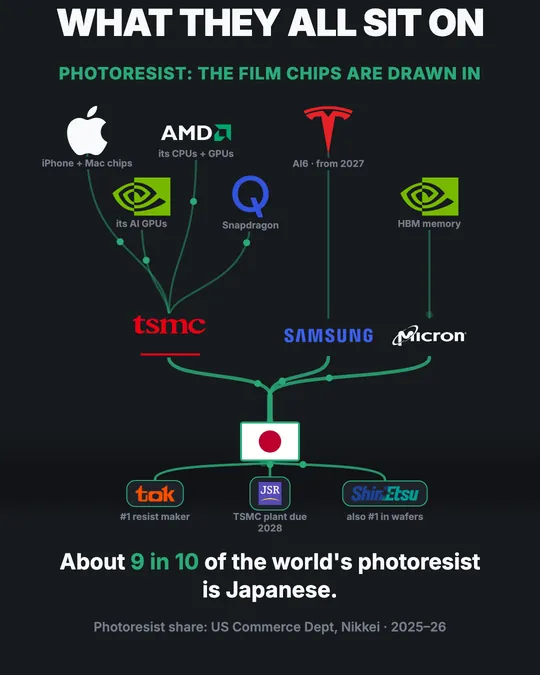
What they all sit on

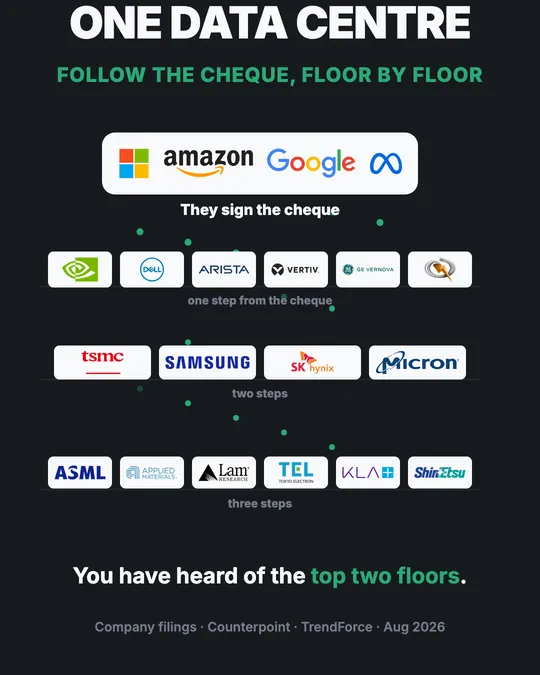
Apple, Nvidia, Tesla and Microsoft don't make their chips. Trace who does, and then who makes their machines, and it ends at one company.

Numbers as of 15 Aug 2026

The full story

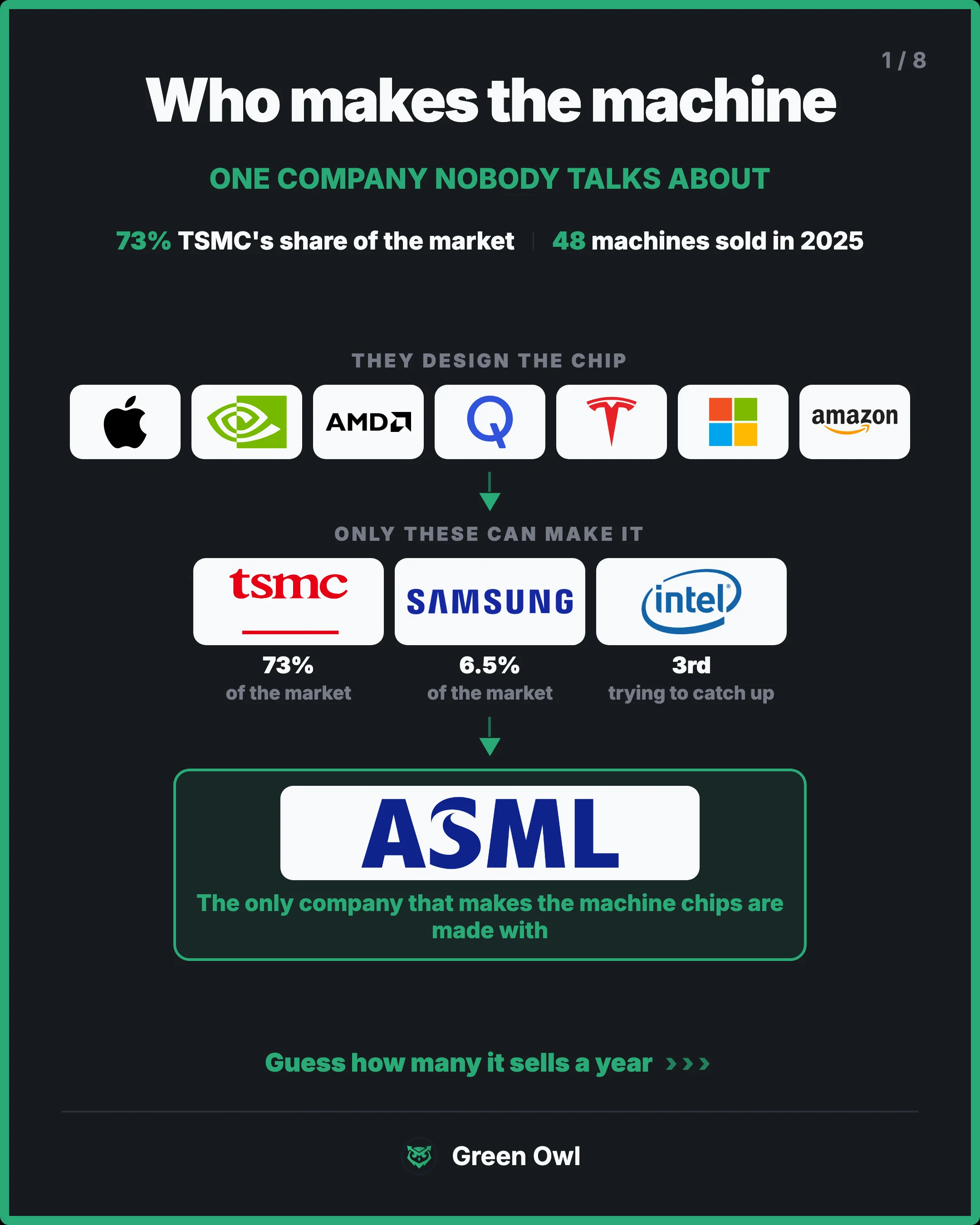
  1. stack · Who makes the machine · sm · One company nobody talks about · 73% · TSMC's share of the market · 48 · machines sold in 2025 · They design the chip · Only these can make it · 73% · of the market · 6.5% · of the market · 3rd · trying to catch up · The only company that makes the machine chips
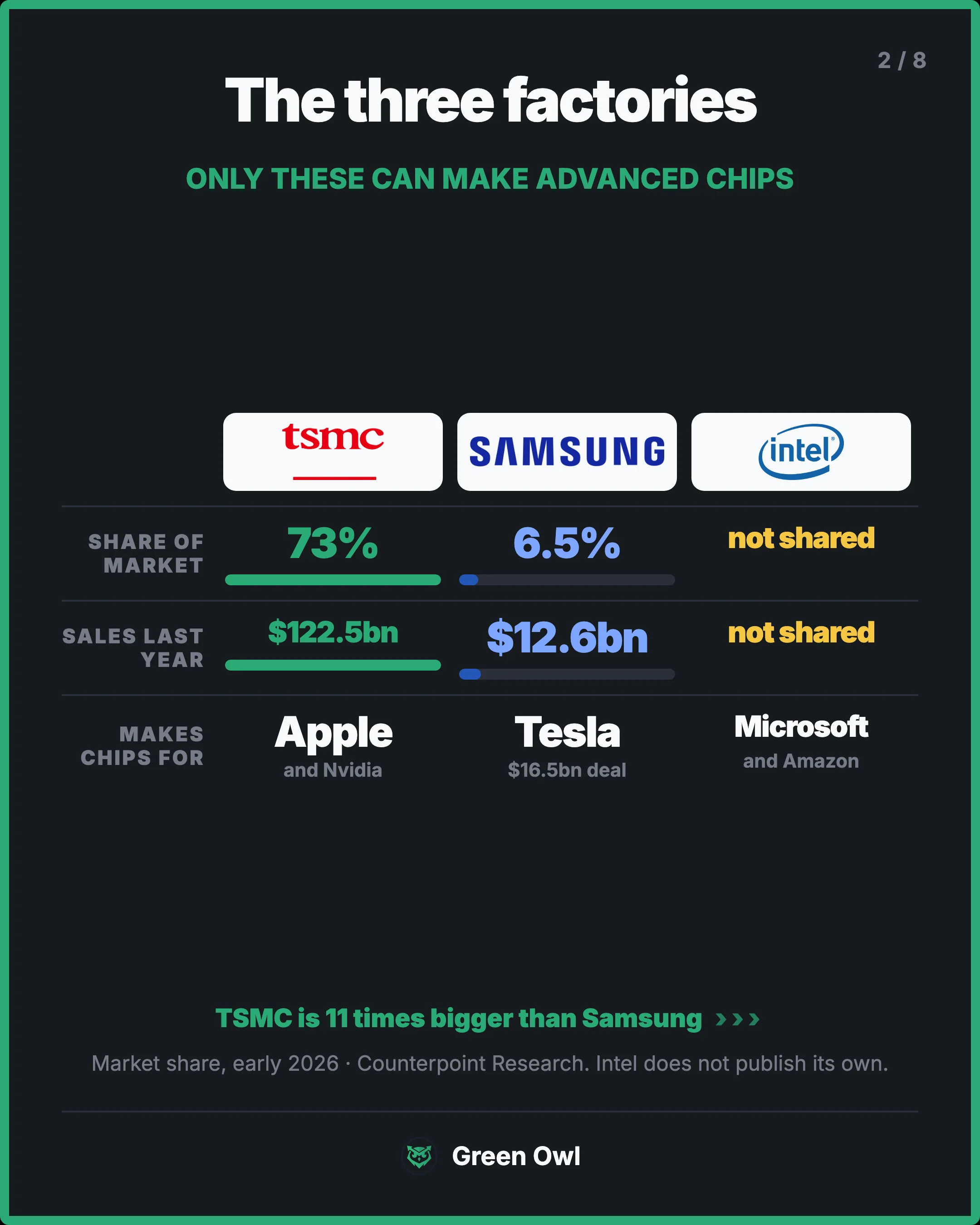
  2. compare · The three factories · sm · Share of market · 73% · green · 6.5% · blue · not shared · Sales last year · $122.5bn · green · $12.6bn · blue · not shared · Makes chips for · Apple · and Nvidia · Tesla · $16.5bn deal · Microsoft · and Amazon · TSMC is 11 times bigger than Samsung · Market shar
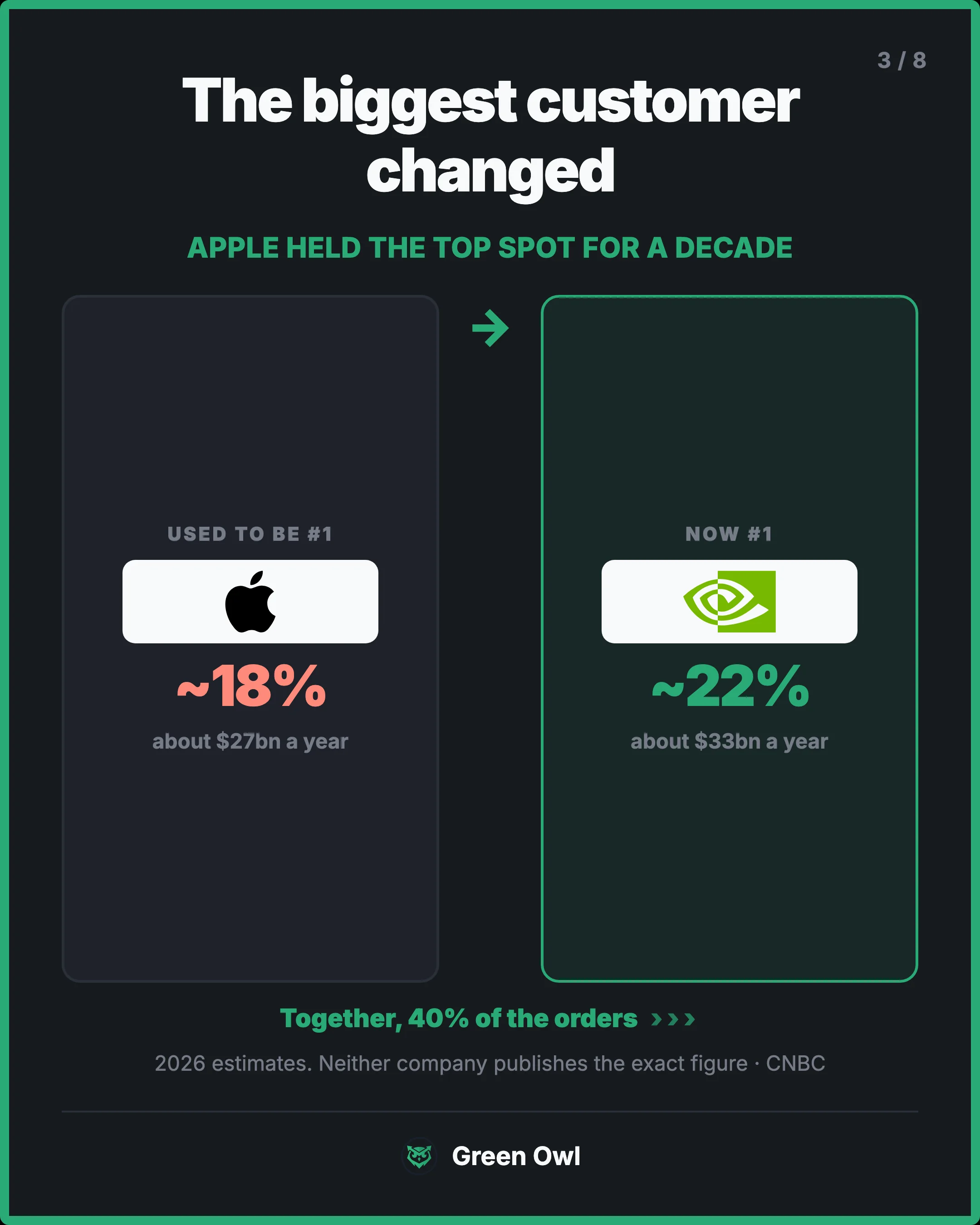
  3. swap · The biggest customer changed · sm · Used to be #1 · ~18% · about $27bn a year · Now #1 · ~22% · about $33bn a year · Together, 40% of the orders · 2026 estimates. Neither company publishes the exact figure · CNBC · Apple was TSMC's biggest customer for over ten years. AI chips are far bigger
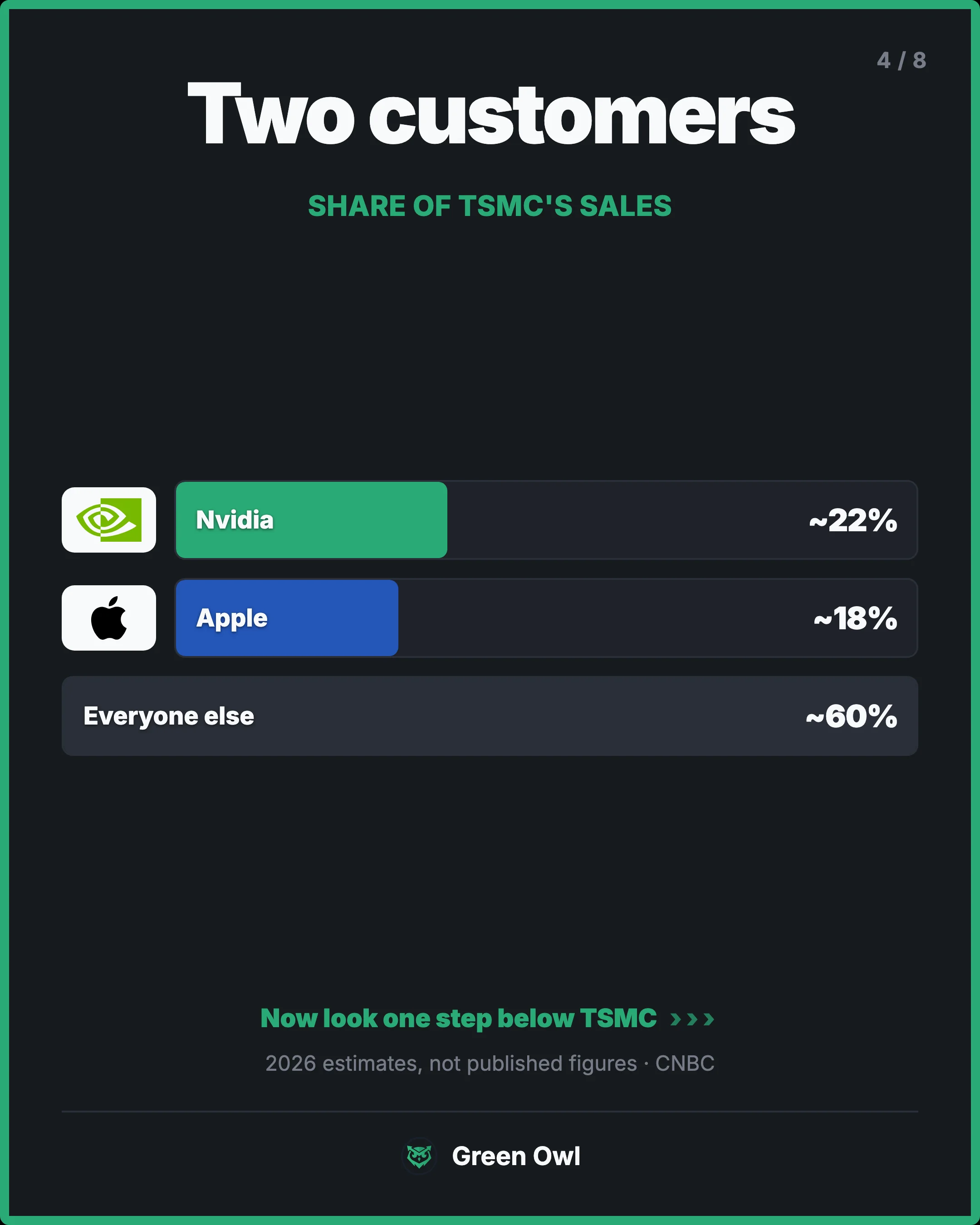
  4. bars · Two customers · Share of TSMC's sales · Nvidia · ~22% · w · Apple · ~18% · w · Everyone else · ~60% · w · Now look one step below TSMC · 2026 estimates, not published figures · CNBC · Nvidia and Apple together are close to 40% of the world's biggest chip factory. That is a lot on two names.
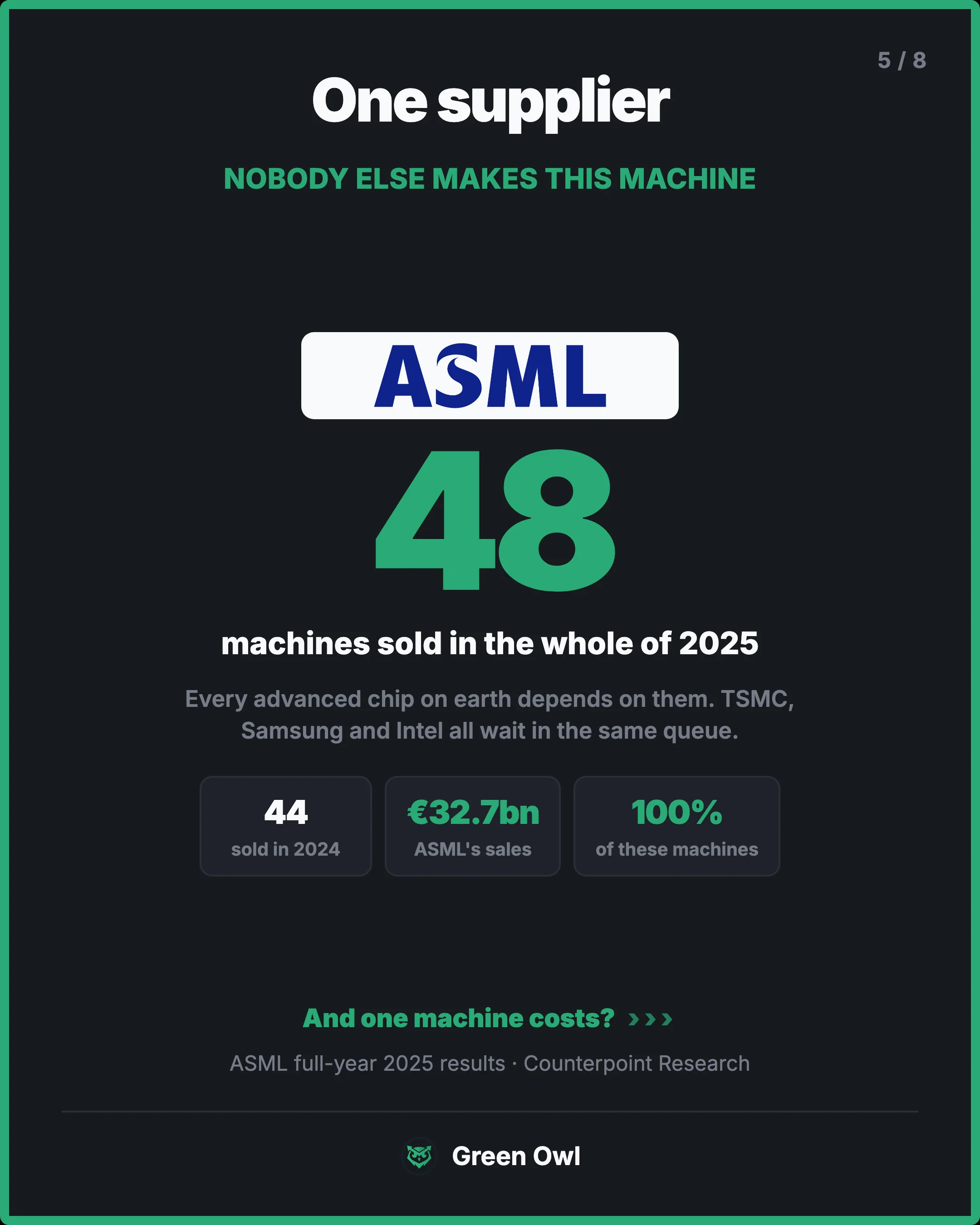
  5. hero · One supplier · sm · 48 · machines sold in the whole of 2025 · Every advanced chip on earth depends on them. TSMC, Samsung and Intel all wait in the same queue. · 44 · sold in 2024 · €32.7bn · ASML's sales · 100% · of these machines · And one machine costs? · ASML full-year 2025 results · Coun
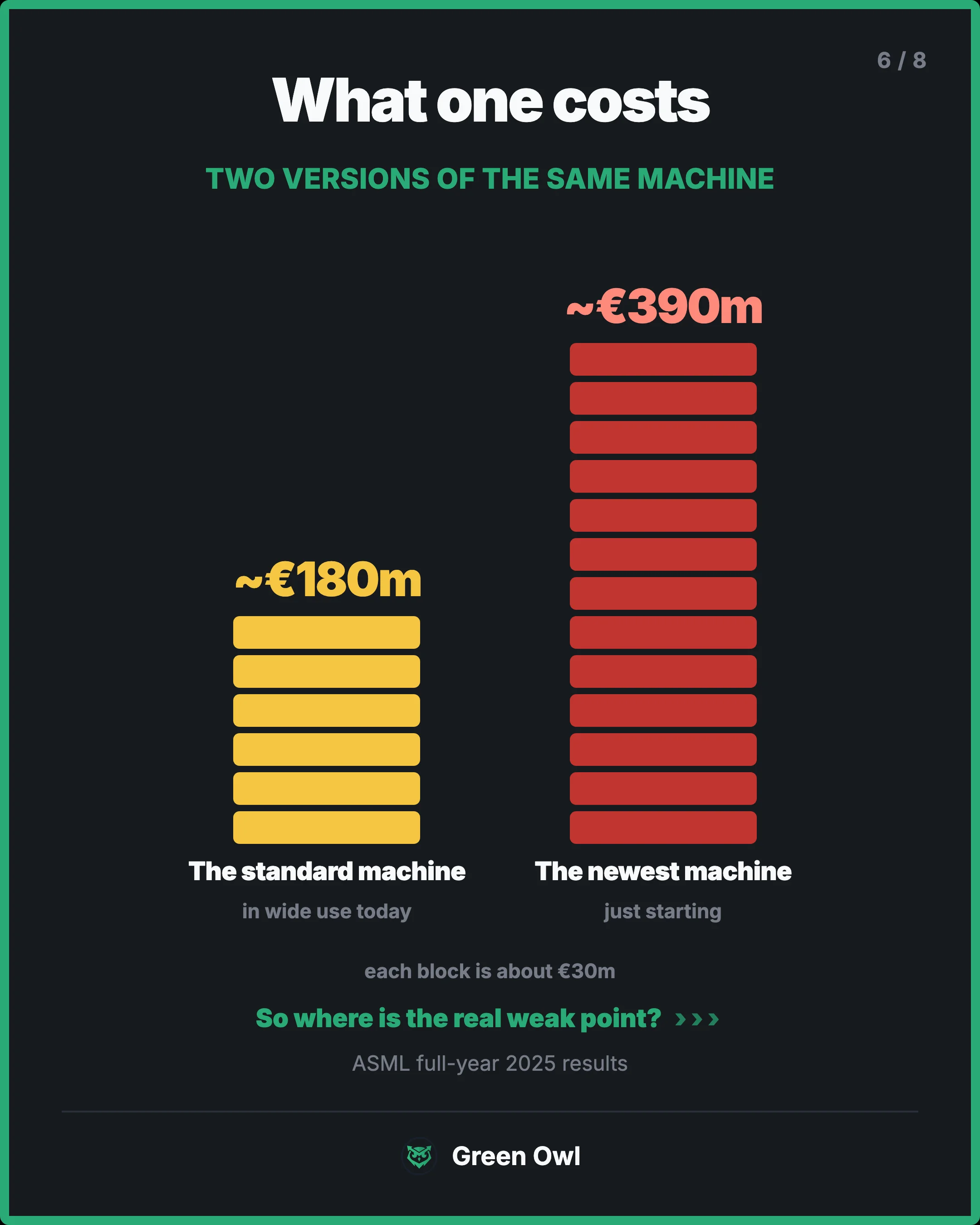
  6. stacks · What one costs · sm · each block is about €30m · The standard machine · in wide use today · ~€180m · a · The newest machine · just starting · ~€390m · r · So where is the real weak point? · ASML full-year 2025 results · Two versions of the same machine. Drawn as money, the gap stops being a
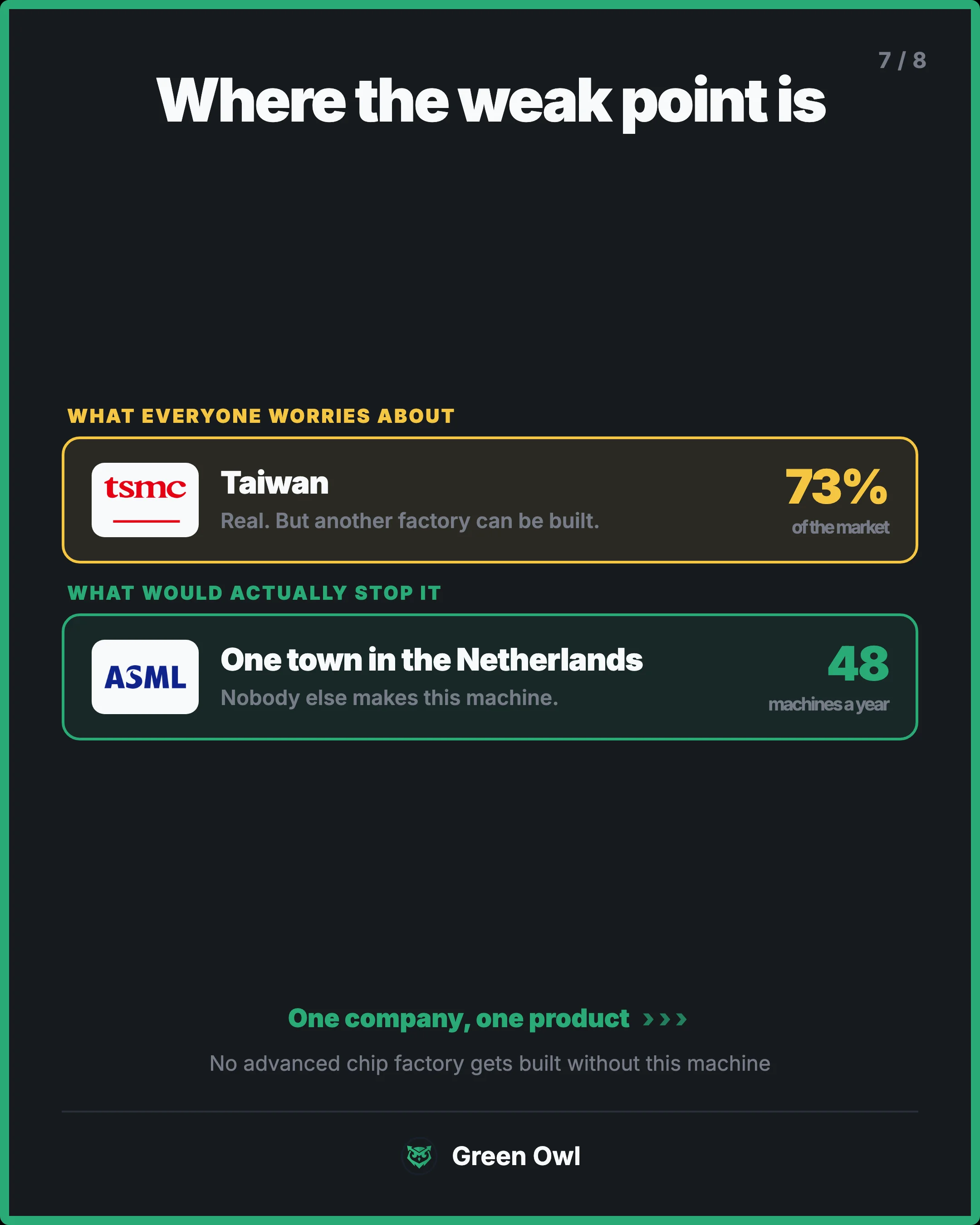
  7. split · Where the weak point is · sm · What everyone worries about · Taiwan · Real. But another factory can be built. · 73% · of the market · a · What would actually stop it · One town in the Netherlands · Nobody else makes this machine. · 48 · machines a year · g · One company, one product · No adv
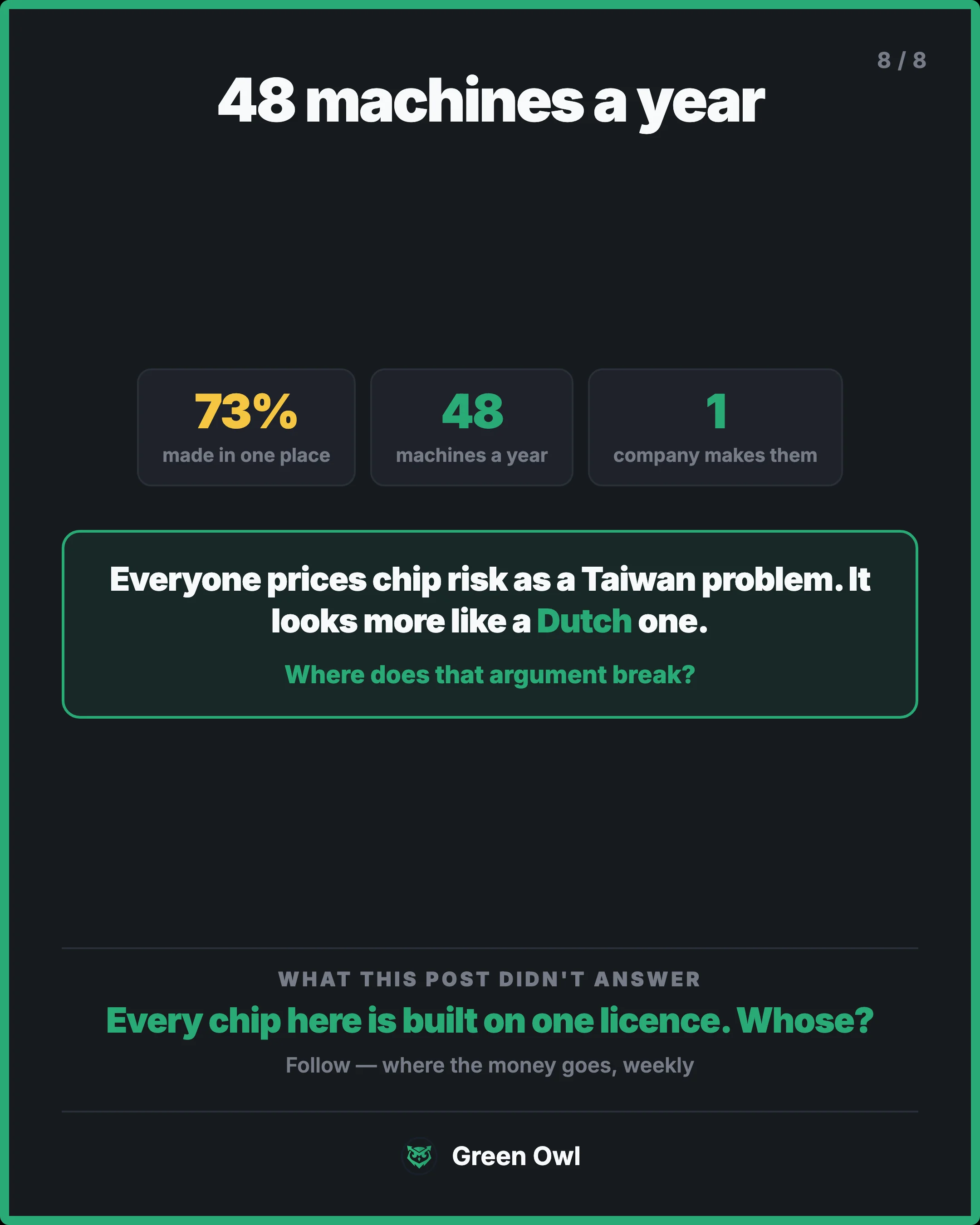
  8. close · 48 machines a year · sm · 73% · made in one place · 48 · machines a year · 1 · company makes them · Everyone prices chip risk as a Taiwan problem. It looks more like a Dutch one. · Where does that argument break? · WHAT THIS POST DIDN'T ANSWER · Every chip here is built on one licence. Whose

Three layers, and the bottom one is a name most people have never said out loud.

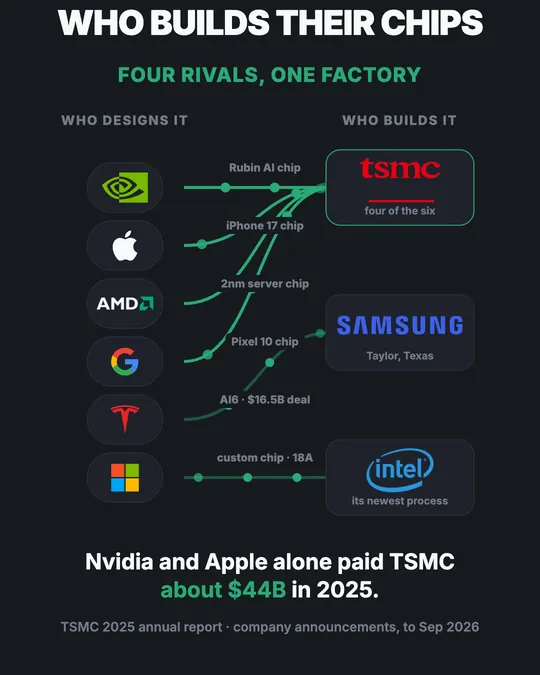
The top layer designs. Apple, Nvidia, AMD and Qualcomm draw their chips and hand the files to TSMC. Tesla signed an eight-year deal worth at least $16.5bn for Samsung to build its AI6 chip at the Taylor, Texas fab, with mass production targeted for the second half of 2027. Microsoft and Amazon have both been confirmed as customers for Intel's 18A process, for Azure and AWS silicon.

The middle layer manufactures. Three companies run leading-edge logic at scale: TSMC, Samsung Foundry and Intel Foundry. That is the whole list.

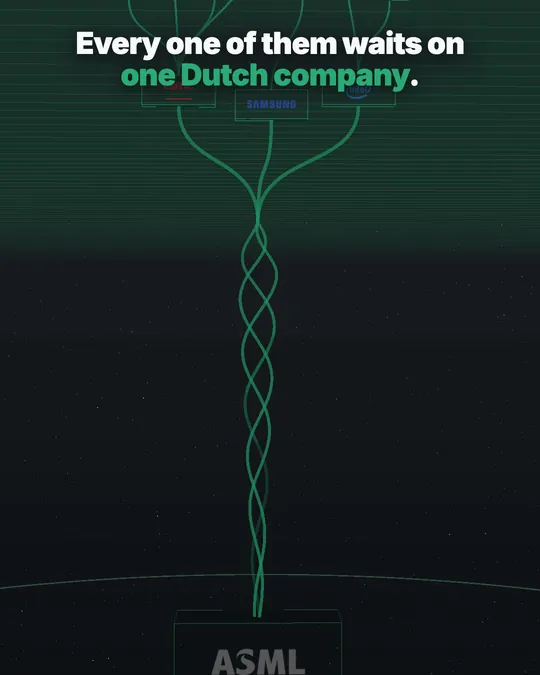
The bottom layer makes the machine all three need. Extreme ultraviolet lithography is what prints the smallest features on a modern chip, and ASML in Veldhoven is the only company on earth that builds an EUV scanner. Nikon and Canon left the technology more than a decade ago and nobody replaced them.

The scale of that bottleneck: ASML said it will ship about 65 low-NA EUV systems in 2026, up from 44 in 2025. Sixty-five machines a year is the tap for the entire advanced chip industry.

One caveat on reading this frame, and it matters. Each line names ONE product and who fabricates it - not everything that company buys. Apple has Samsung and LG making iPhone displays and Samsung, SK Hynix and Micron making the memory; none of that changes the fact that the processor it designs is built by TSMC. Qualcomm has used Samsung Foundry for parts in the past. And TSMC itself still buys plenty of older, non-EUV tools from Nikon and Canon.

Why it matters: when people talk about chip supply risk they usually mean Taiwan. The narrower point is a single Dutch company with a single product line, and a queue that is measured in dozens of units a year.

Next week: what one of those machines actually costs.

Want to see how this looks now?

When enough people ask, we re-check the numbers and redraw it.

Where the numbers come from

Companies in this picture

More like this