The coating every chip needs
Apple, Nvidia and AMD chips are all built by TSMC. Every one is printed through a coating that mostly comes from Japan.
The full story
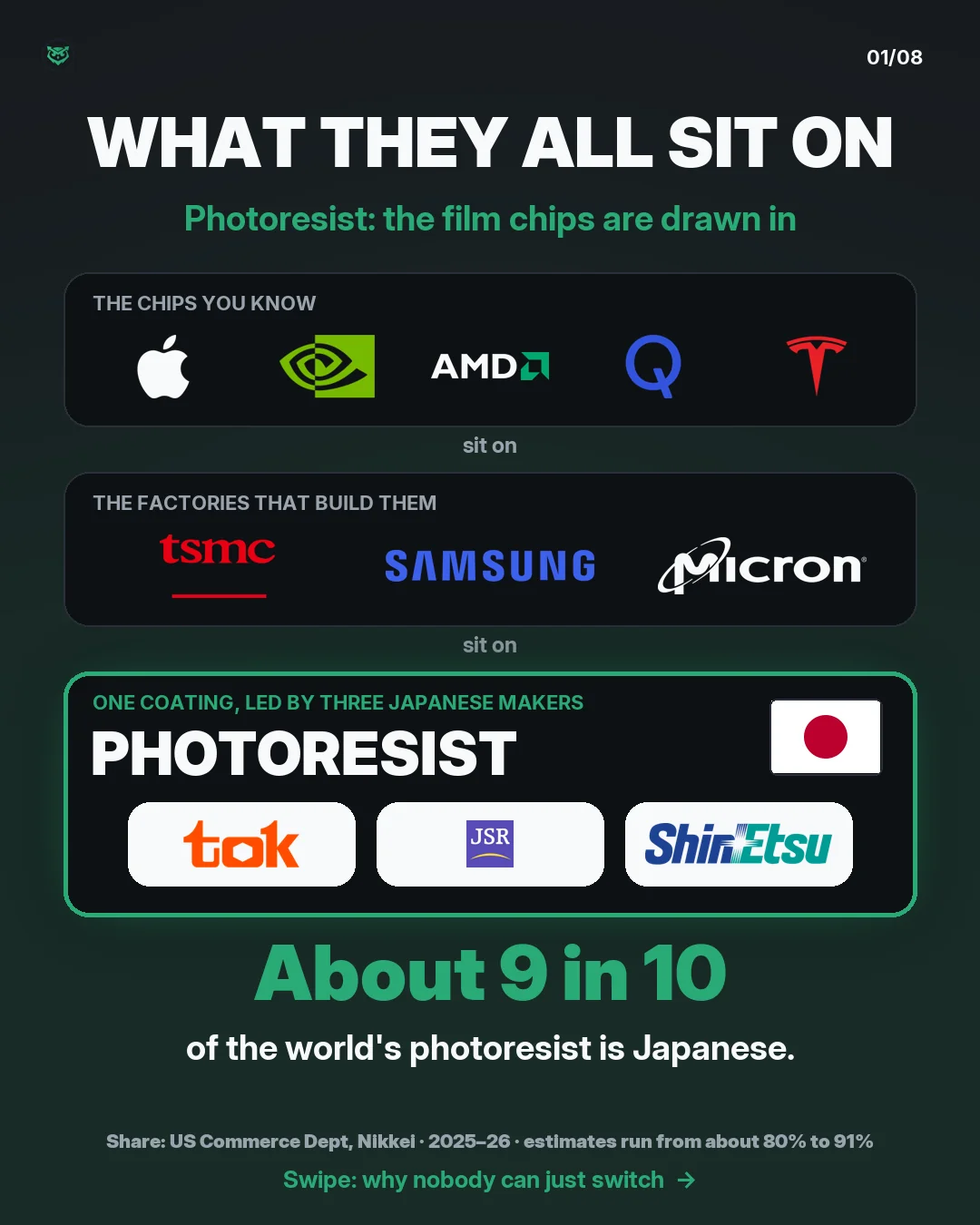
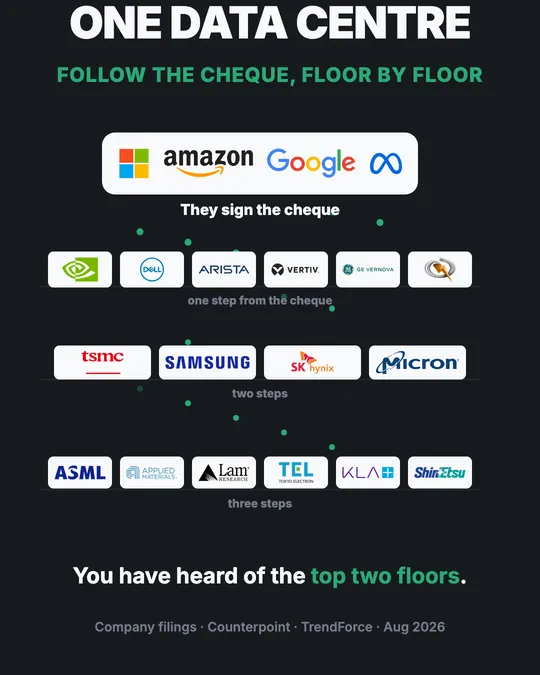
Three layers again, and this time the bottom isn't a machine.
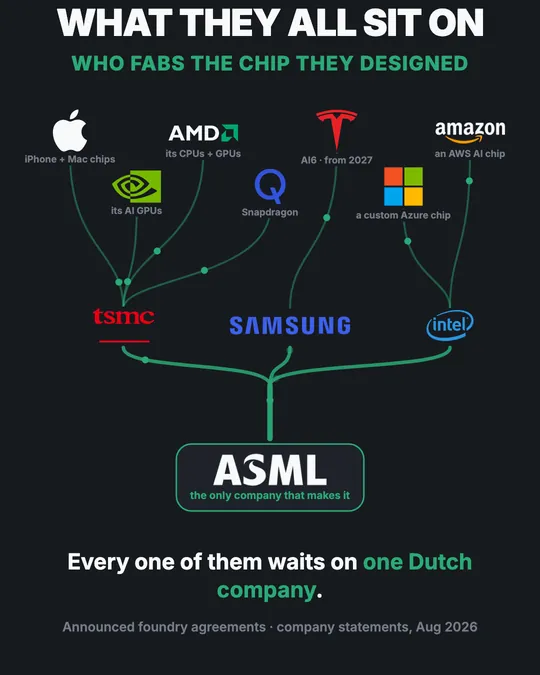
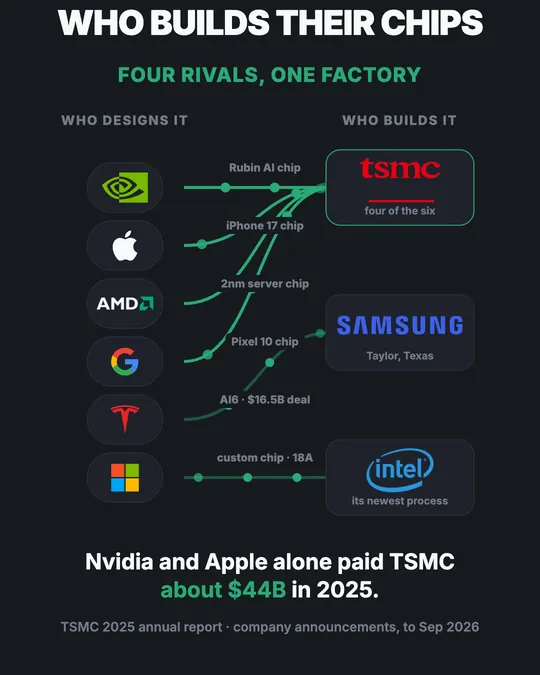
Top: Apple, Nvidia, AMD and Qualcomm design chips and TSMC builds them. Tesla's AI6 goes to Samsung in Texas, with mass production aimed at the second half of 2027. Micron makes memory for Nvidia's AI chips.
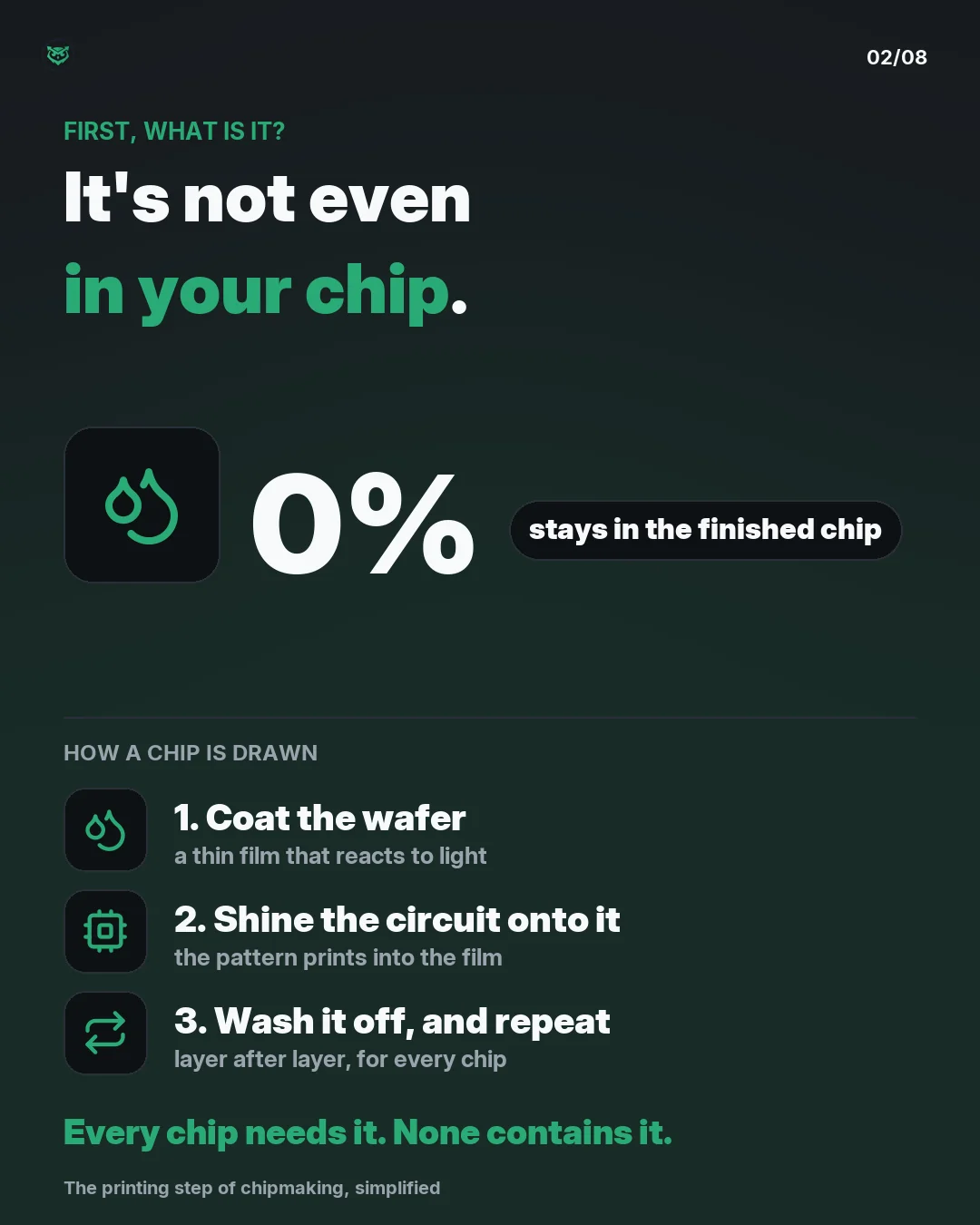
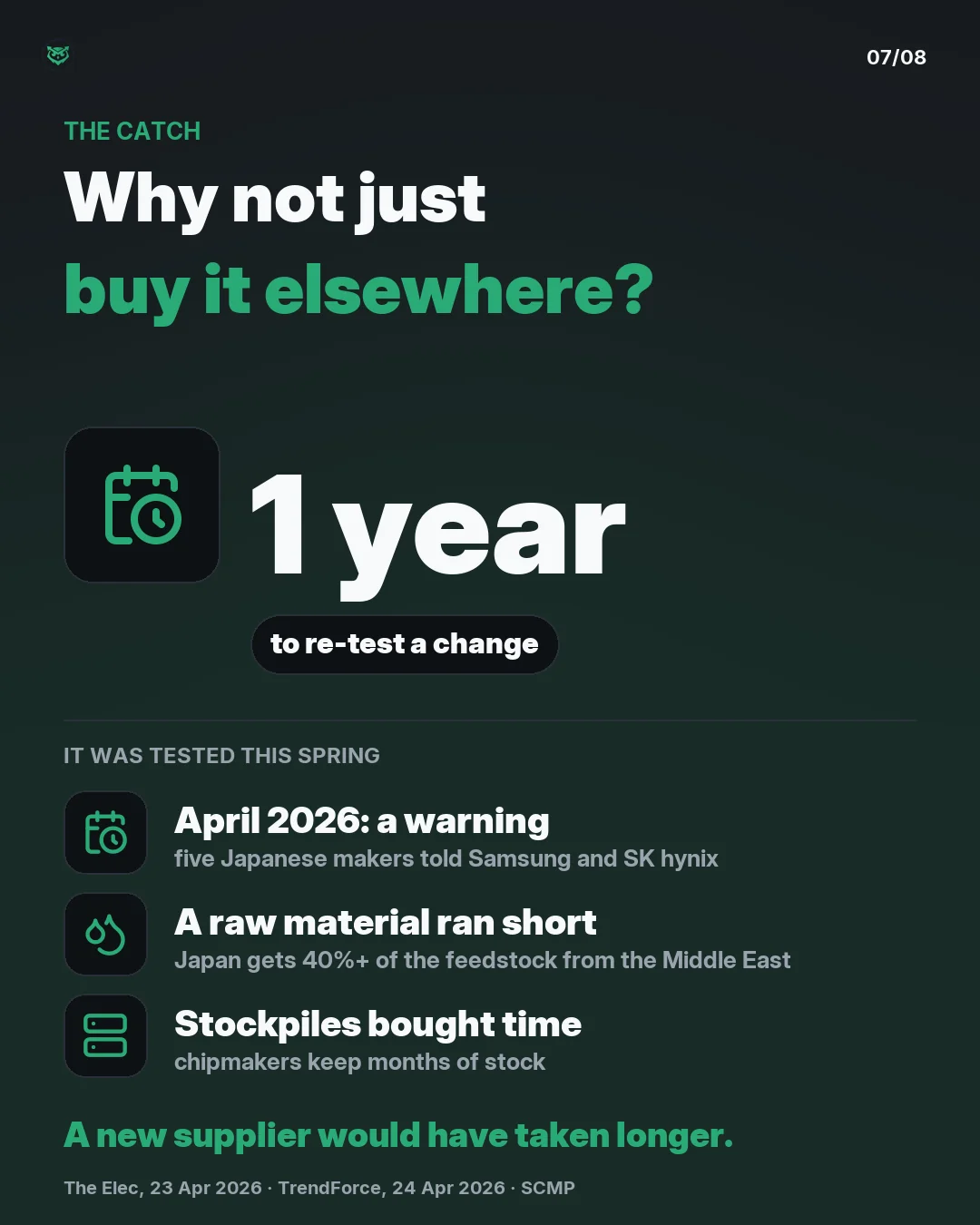
Middle: to print a circuit, a fab spreads a light-sensitive coating called photoresist on the wafer, shines the pattern onto it and washes away what the light touched. The coating doesn't stay in the chip, but no chip gets made without it.
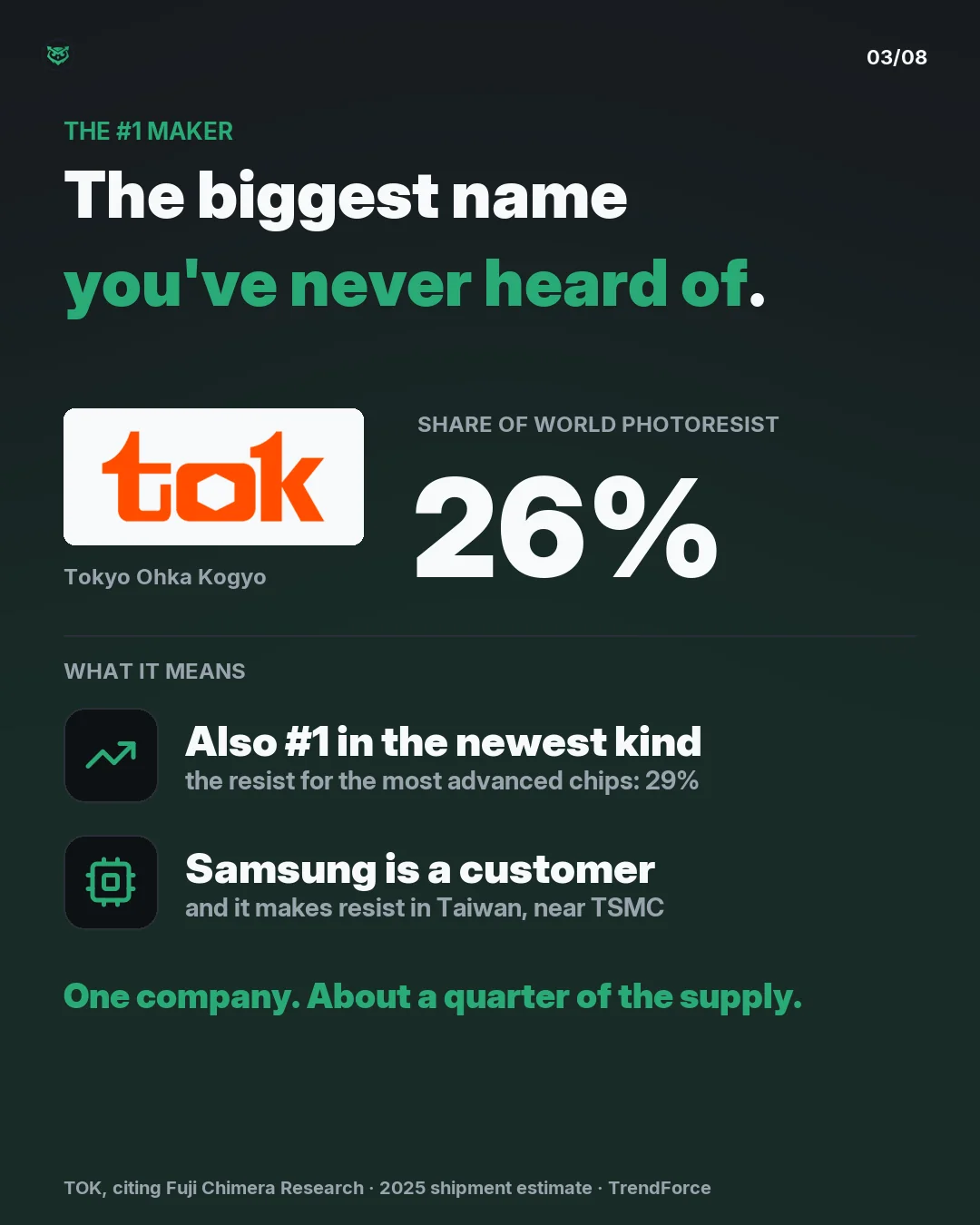
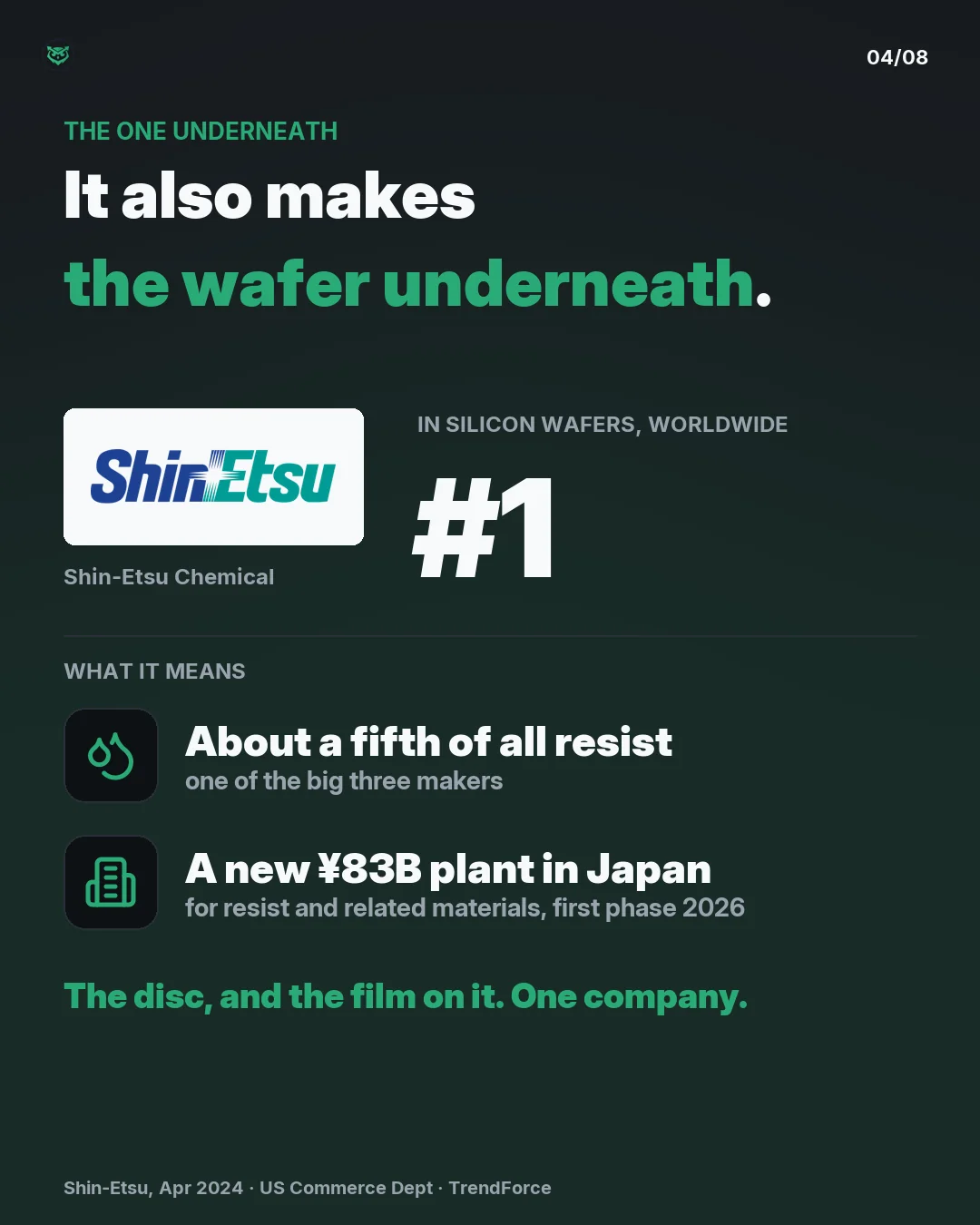
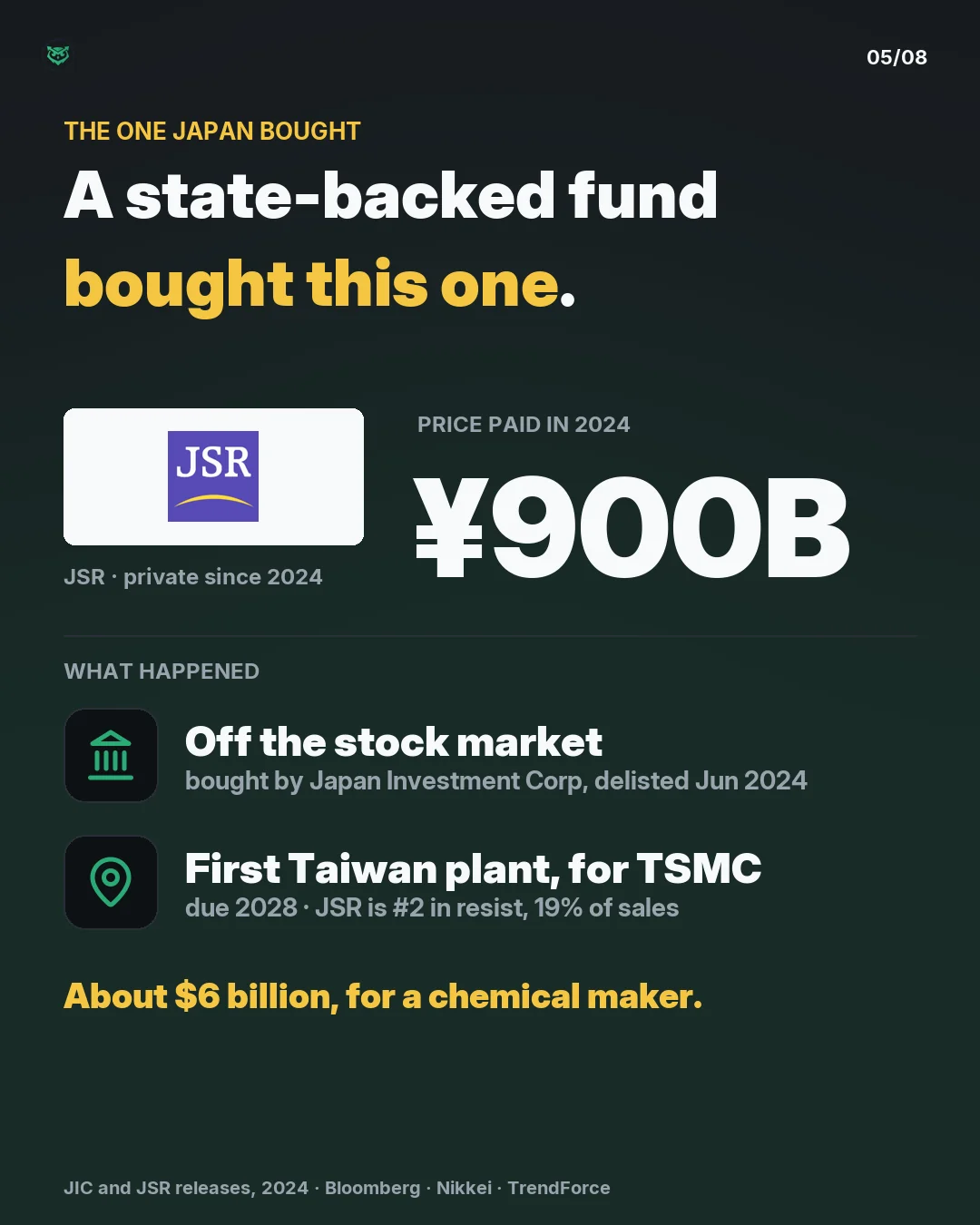
Bottom: Japanese firms led by Tokyo Ohka Kogyo, JSR and Shin-Etsu supply about 90% of the world's photoresist (US Commerce Dept, Nikkei). JSR announced a Taiwan plant in May 2026 to supply TSMC directly. Micron has named JSR and Shin-Etsu top suppliers of front-end chip materials.
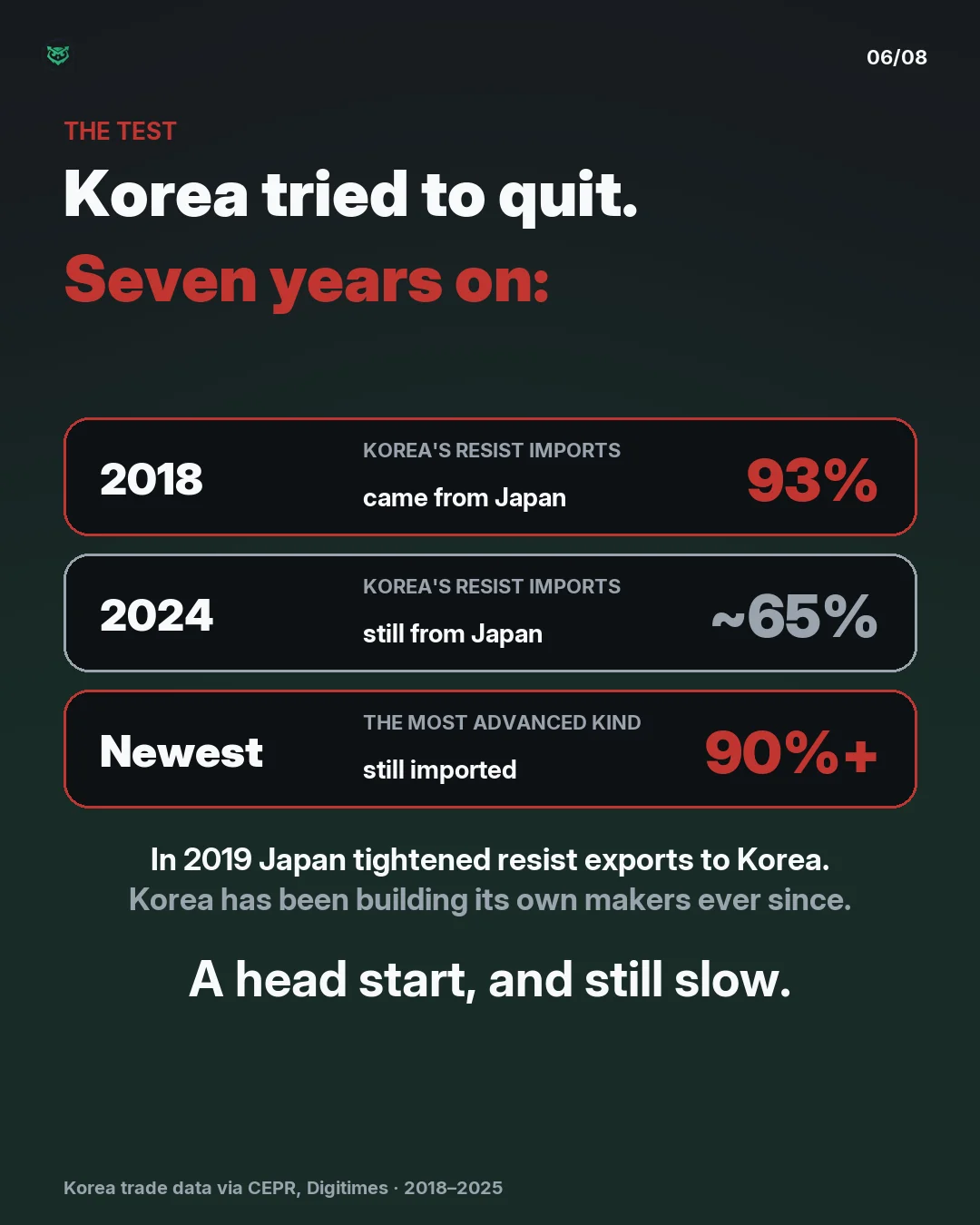
It's been tested once. In 2019 Japan tightened photoresist exports to South Korea, which then bought about 93% of its photoresist from Japan.
Each line names one product, not everything a company buys. These firms sell to most chipmakers; Intel is left off only because we couldn't confirm its supplier. Listed: Shin-Etsu (4063 Tokyo), TOK (4186 Tokyo). JSR went private in 2024.
Want to see how this looks now?
Where the numbers come from
- trade.govtrade.gov
- www.trendforce.comtrendforce.com
- asia.nikkei.comasia.nikkei.com
- www.trendforce.comtrendforce.com
Show all 20 sources
- www.tomshardware.comtomshardware.com
- cepr.orgcepr.org
- electrek.coelectrek.co
- www.thelec.netthelec.net
- www.jsr.co.jpjsr.co.jp
- www.trendforce.comtrendforce.com
- www.trendforce.comtrendforce.com
- www.shinetsu.co.jpshinetsu.co.jp
- www.jsrmicro.comjsrmicro.com
- finance.yahoo.comfinance.yahoo.com
- www.tok.co.jptok.co.jp
- www.trade.govtrade.gov
- www.trendforce.comtrendforce.com
- www.shinetsu.co.jpshinetsu.co.jp
- www.jiccapital.co.jpjiccapital.co.jp
- www.thelec.netthelec.net