Who runs the banks
Citigroup was the biggest bank in America before the crisis. Twenty years later it is the smallest of the six.
The full story
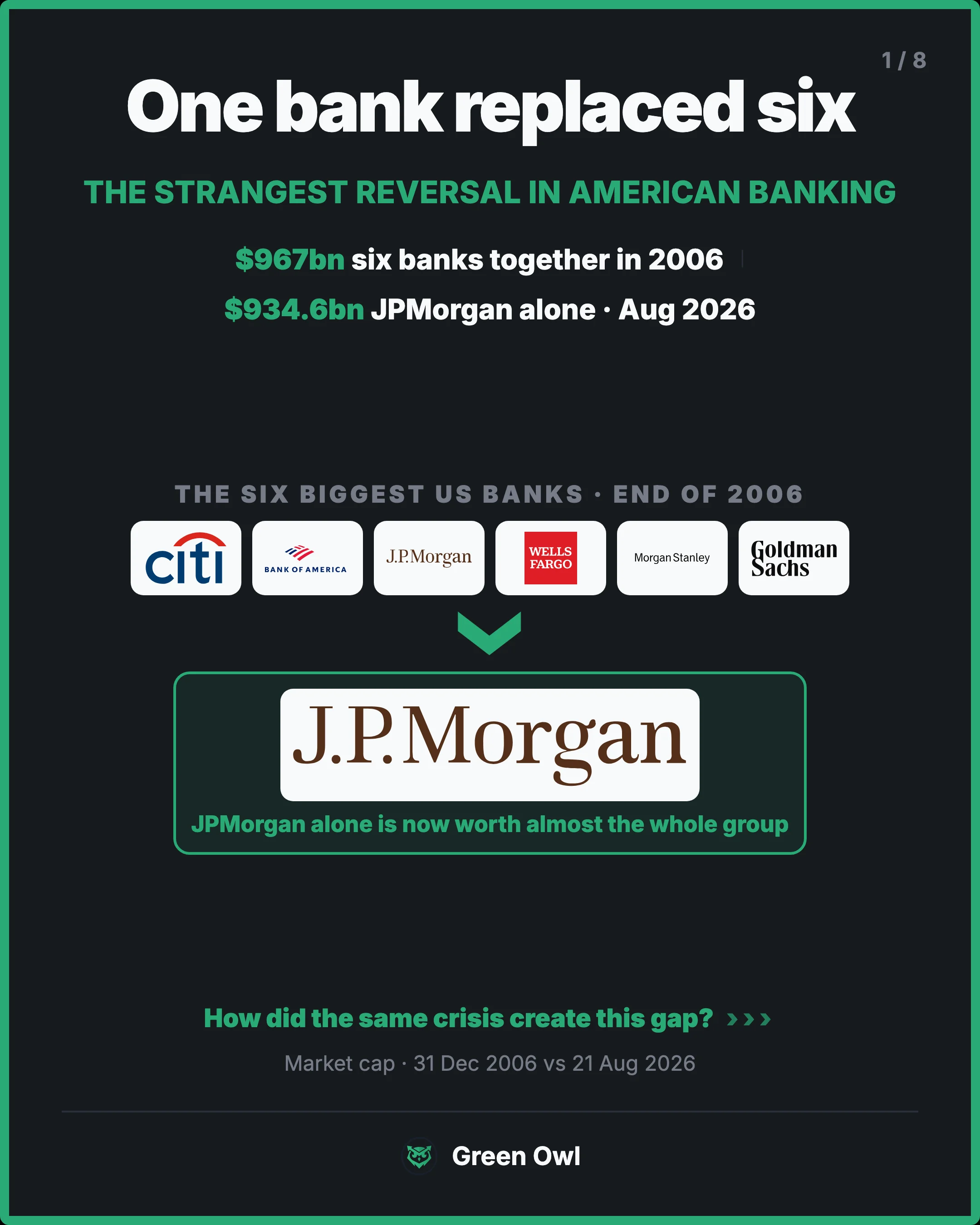
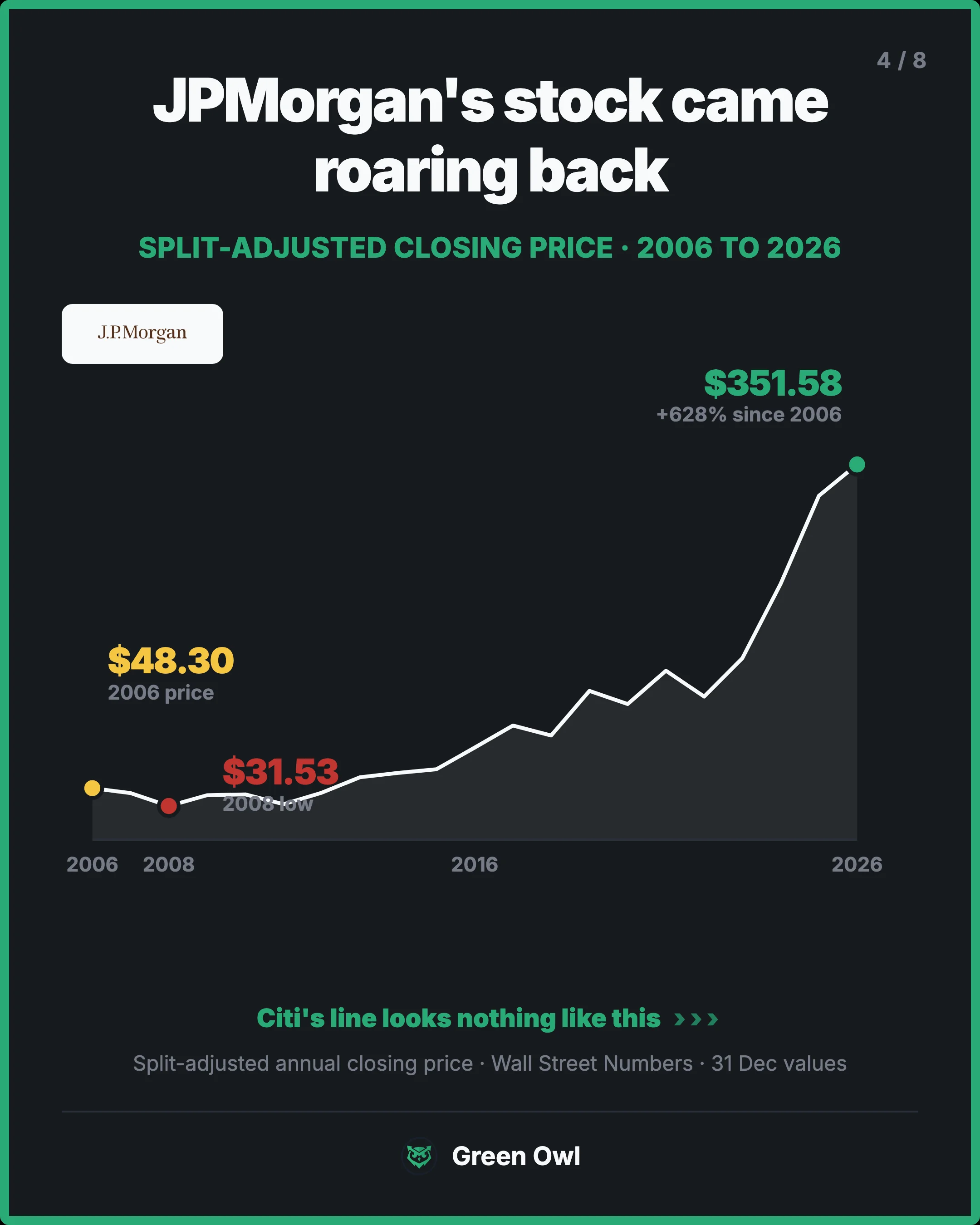
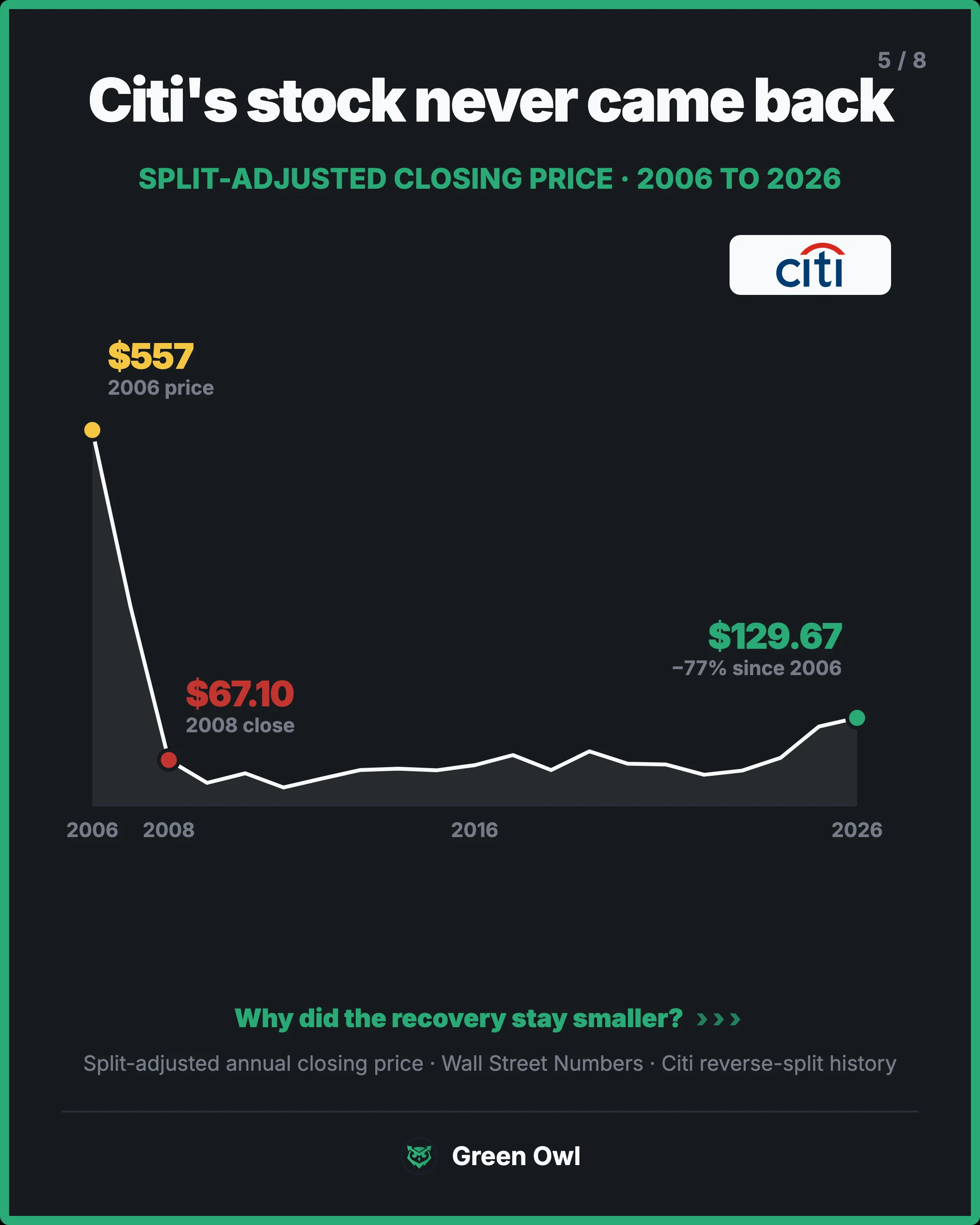
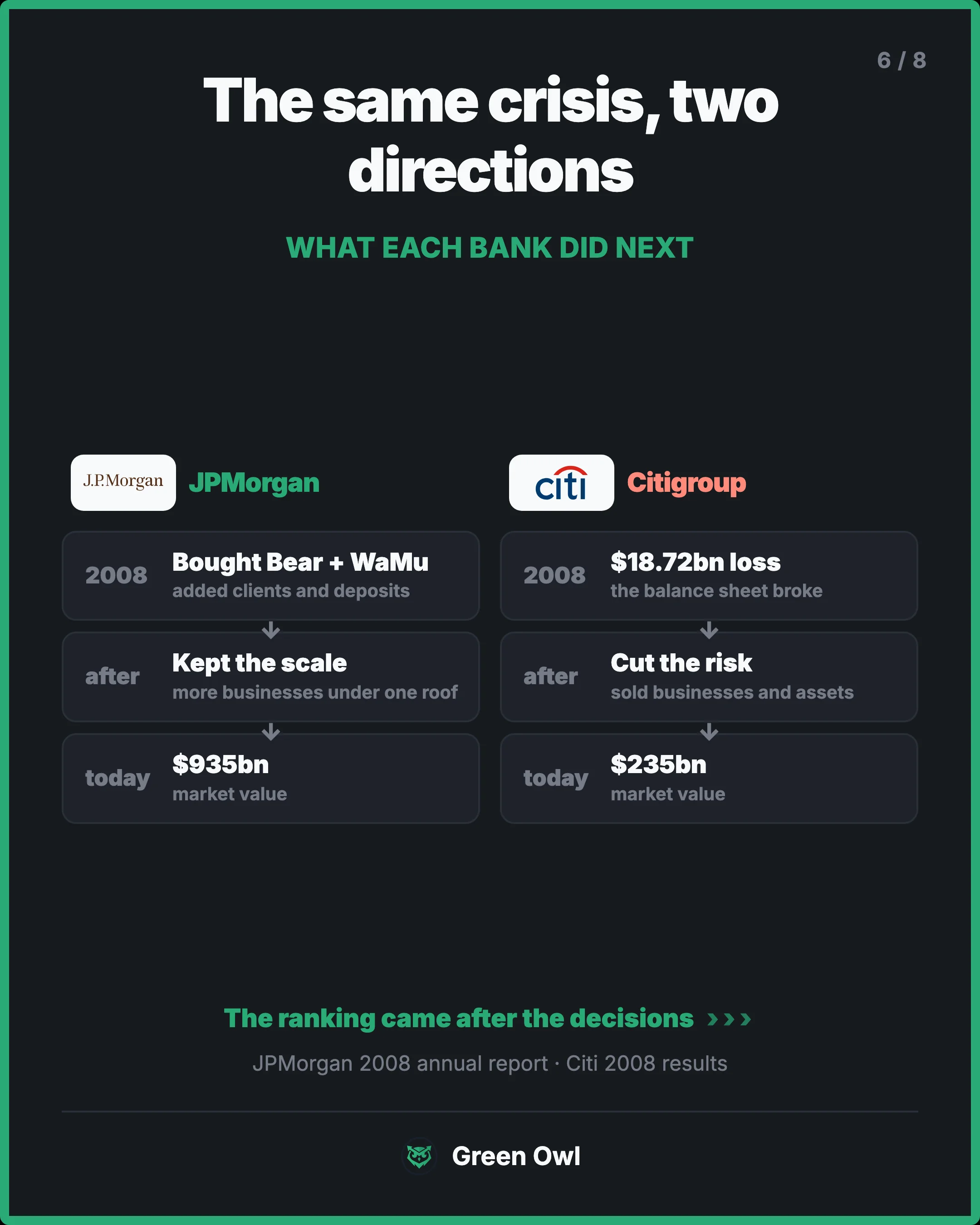
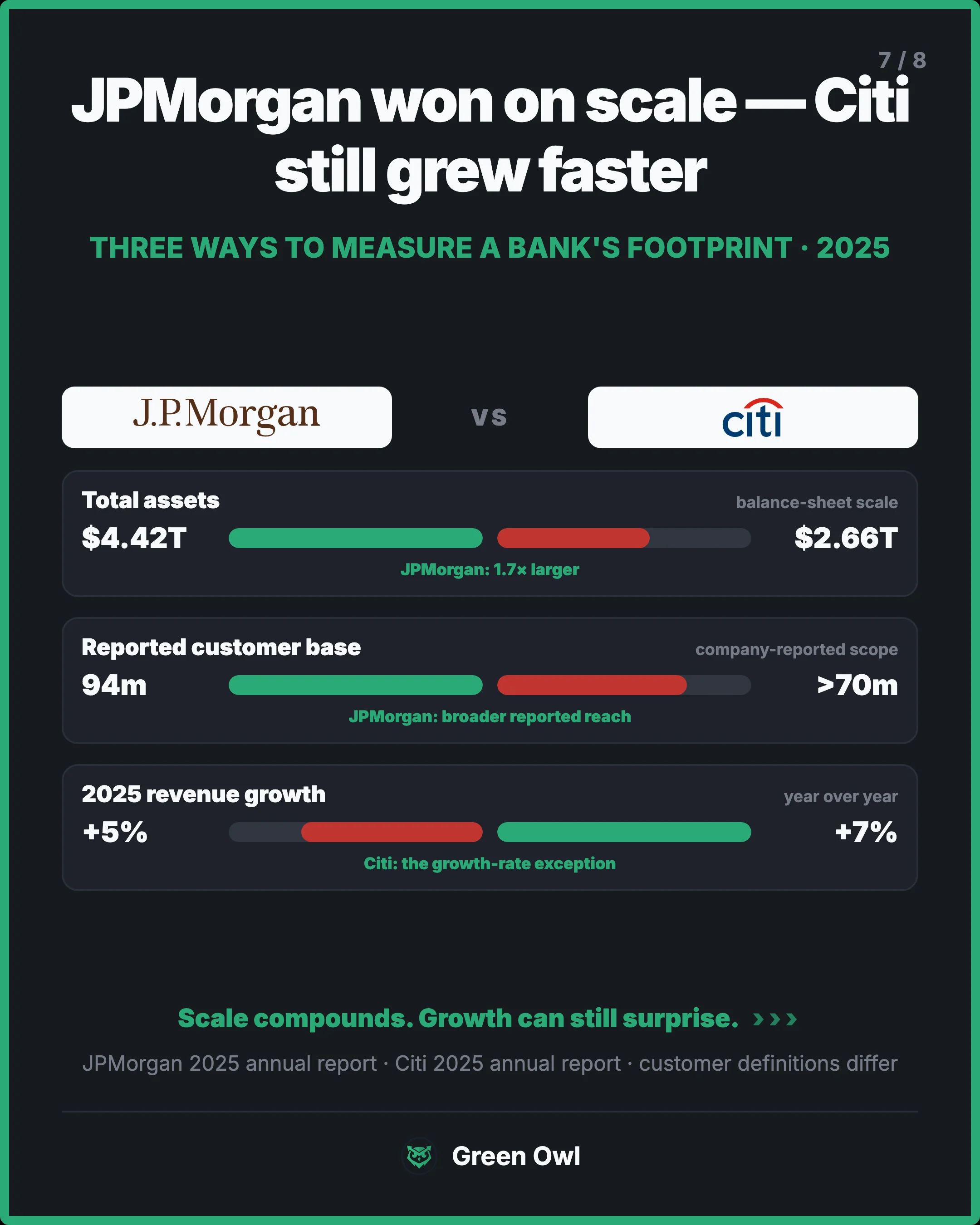
The six biggest US banks by market value, at the end of 2006 and today.
2006: Citigroup $273.6bn, Bank of America $238.8bn, JPMorgan $167.2bn, Wells Fargo $120.1bn, Morgan Stanley $85.4bn, Goldman Sachs $82.3bn.
Today: JPMorgan $970bn, Bank of America $450bn, Morgan Stanley $343bn, Goldman Sachs $302bn, Wells Fargo $268bn, Citigroup $235bn.
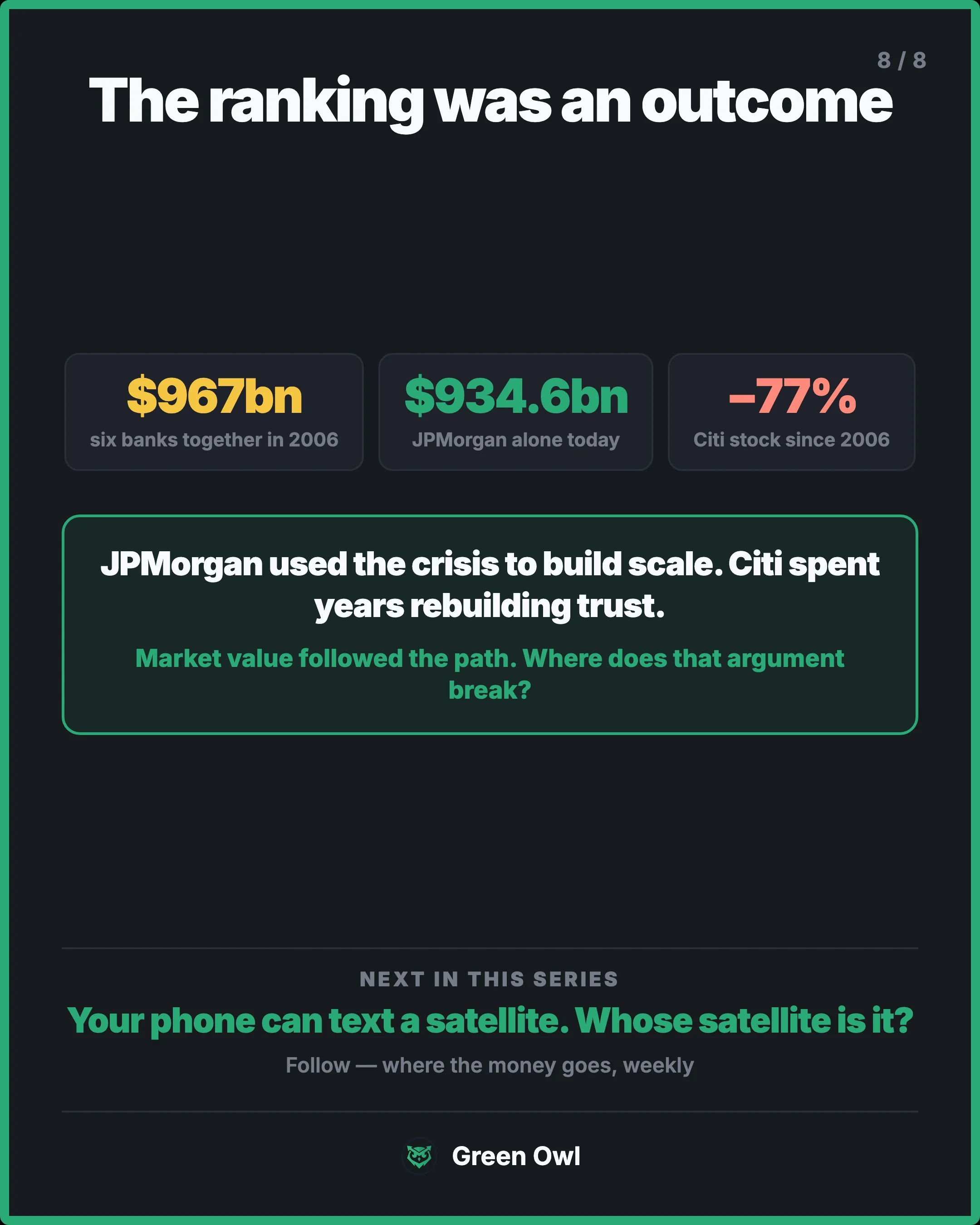
Add up the whole 2006 list and you get $967bn. JPMorgan on its own is worth $970bn now. One bank has replaced the entire industry's 2006 value.
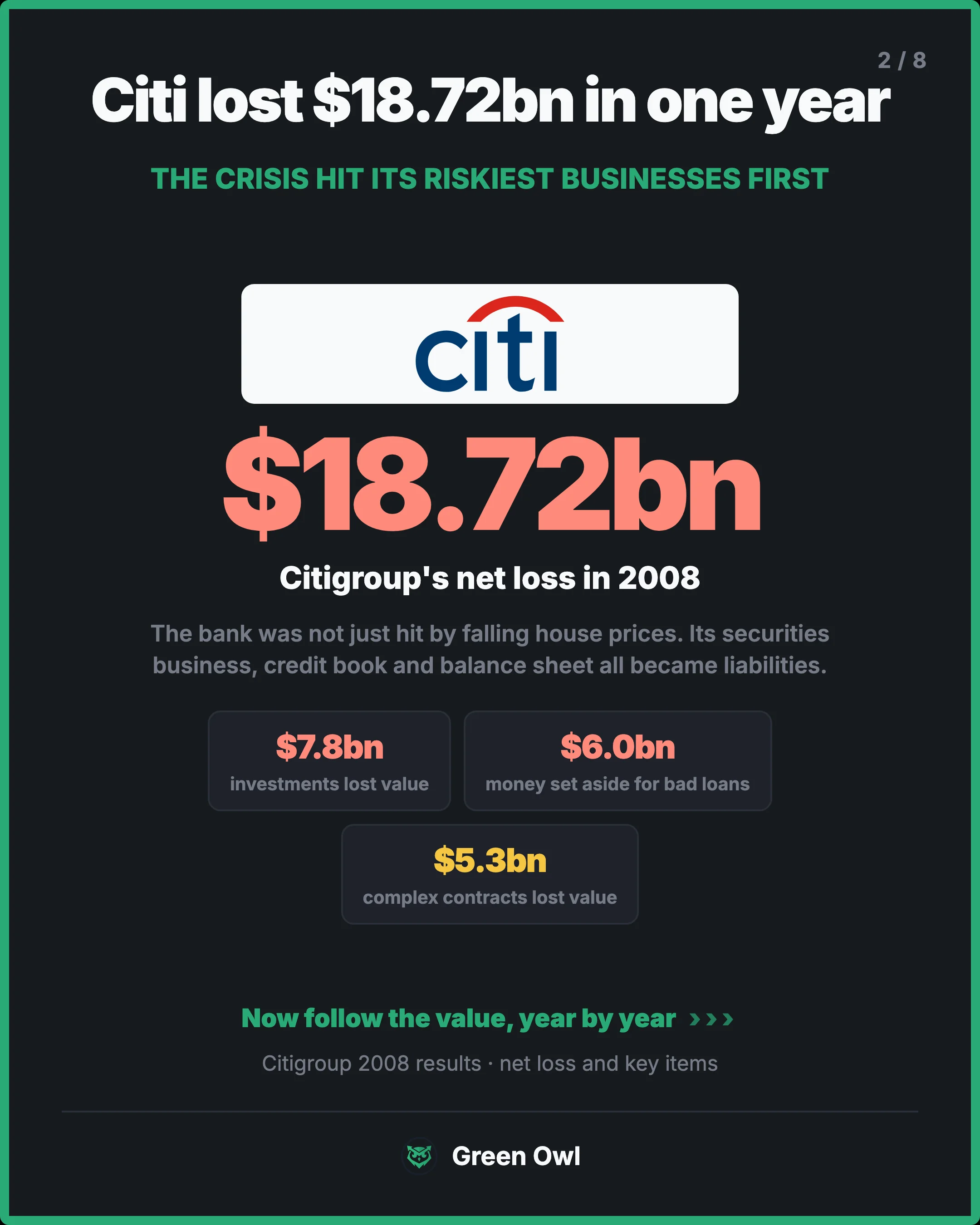
The reversal inside that: Citigroup was first and is now last of the six, worth less in dollars today than it was two decades ago - before counting inflation. Its 2007 was already ugly; by the end of that year it had fallen to $161bn, and by the end of 2008 to $38bn. Wells Fargo, which came fourth in 2006, is fifth now after a decade under a Federal Reserve asset cap that was only lifted in 2025.
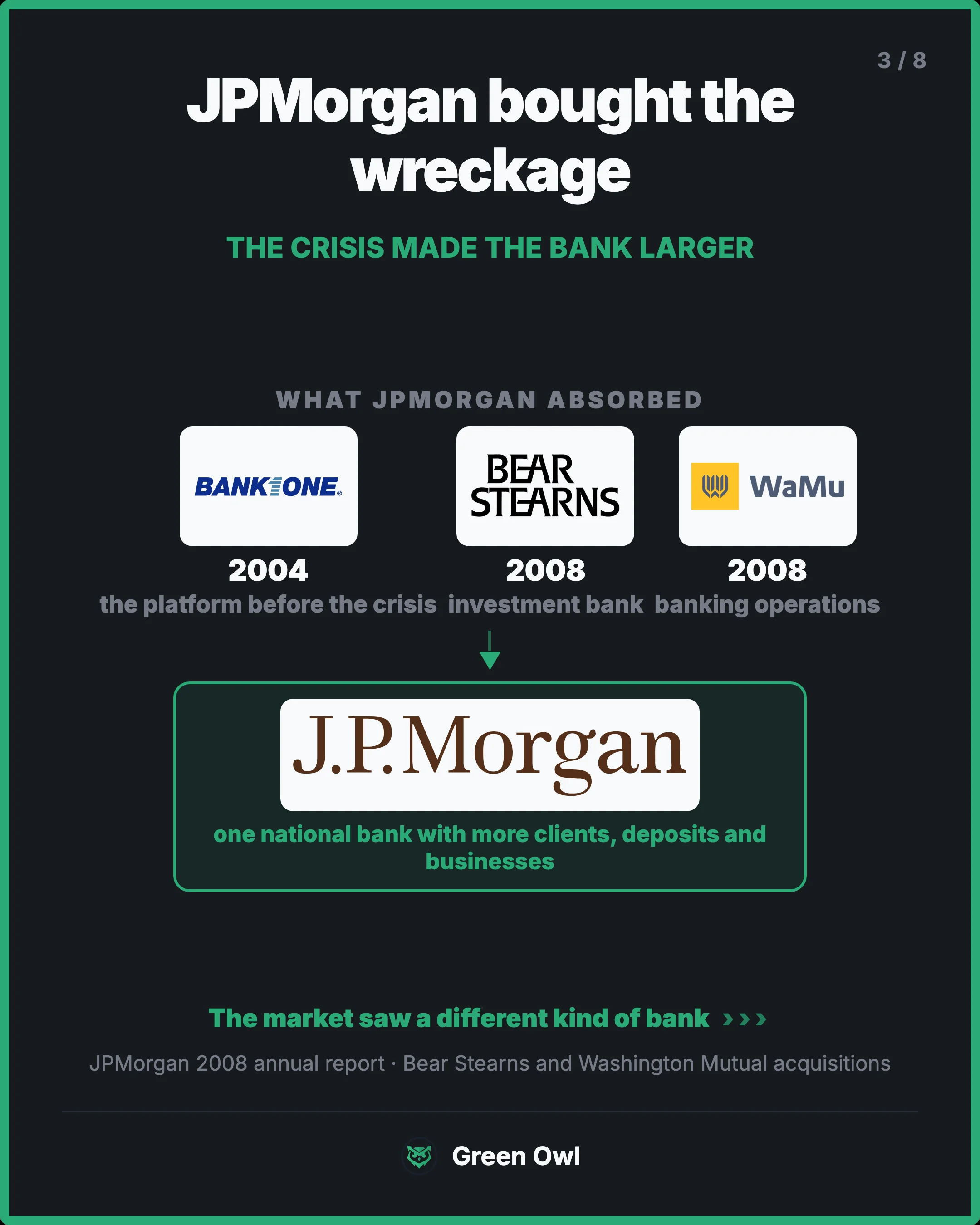
And the two investment banks that everyone expected to disappear in 2008 - Morgan Stanley and Goldman Sachs - are third and fourth, above Wells Fargo and Citi.
One note on method: market capitalisation is what investors will pay for the equity, not the size of the bank. By assets, the biggest banks in the world are Chinese, and ICBC has been first or near it since 2007.
Next week: what the deposits actually pay for.