Big Pharma's cliff
Five of these eight drugmakers face a U.S. exclusivity cliff on their biggest medicine before 2030.
The full story
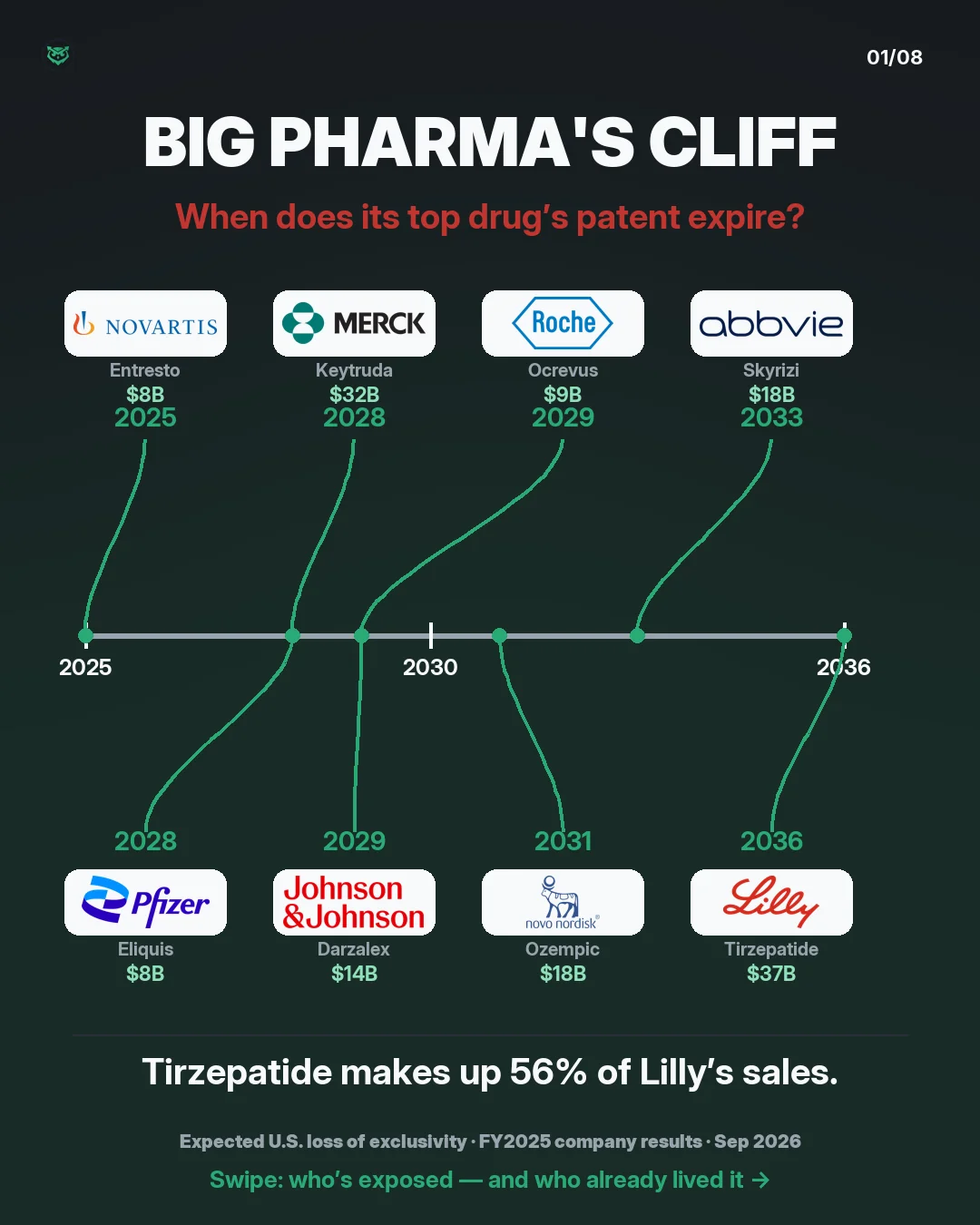
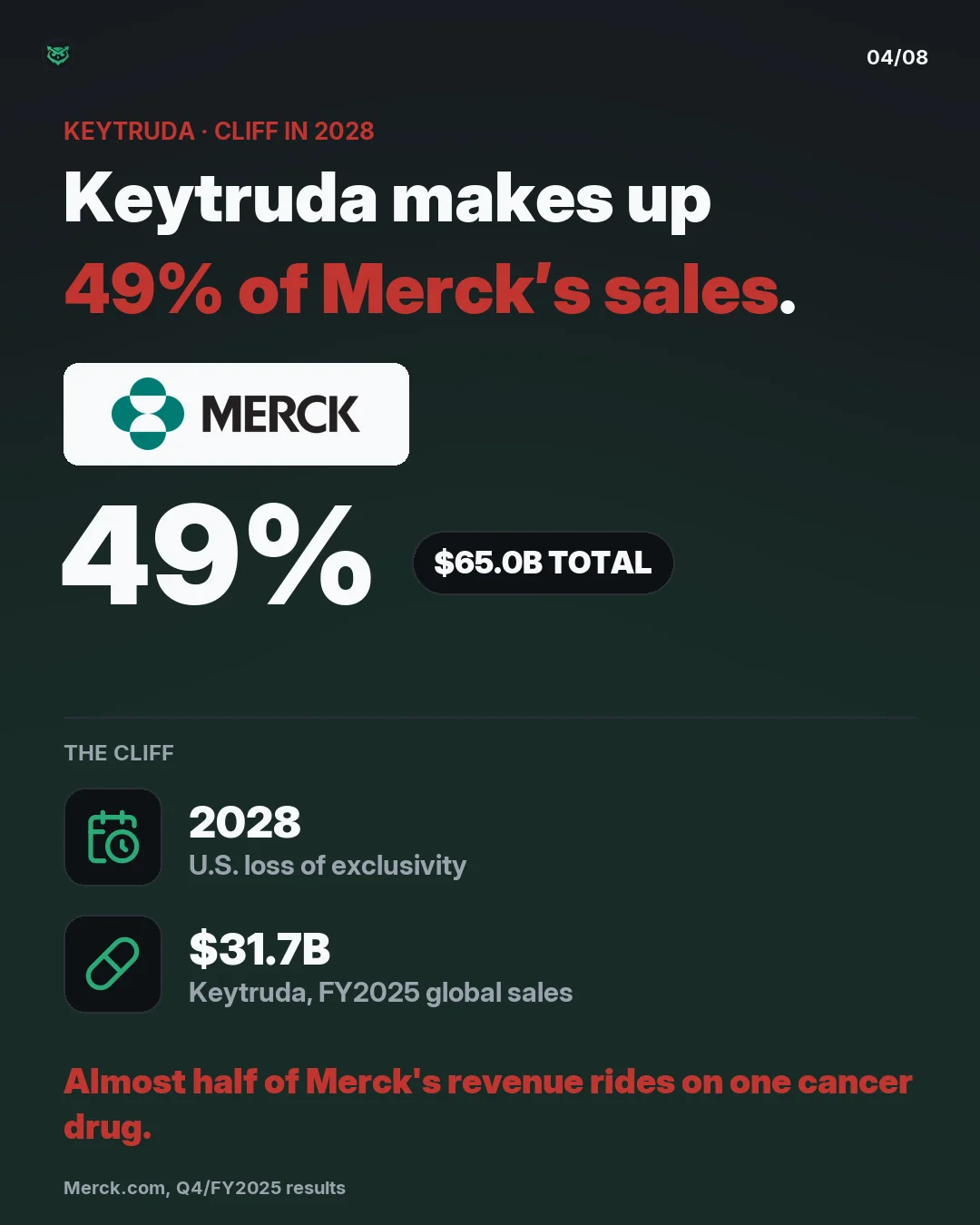
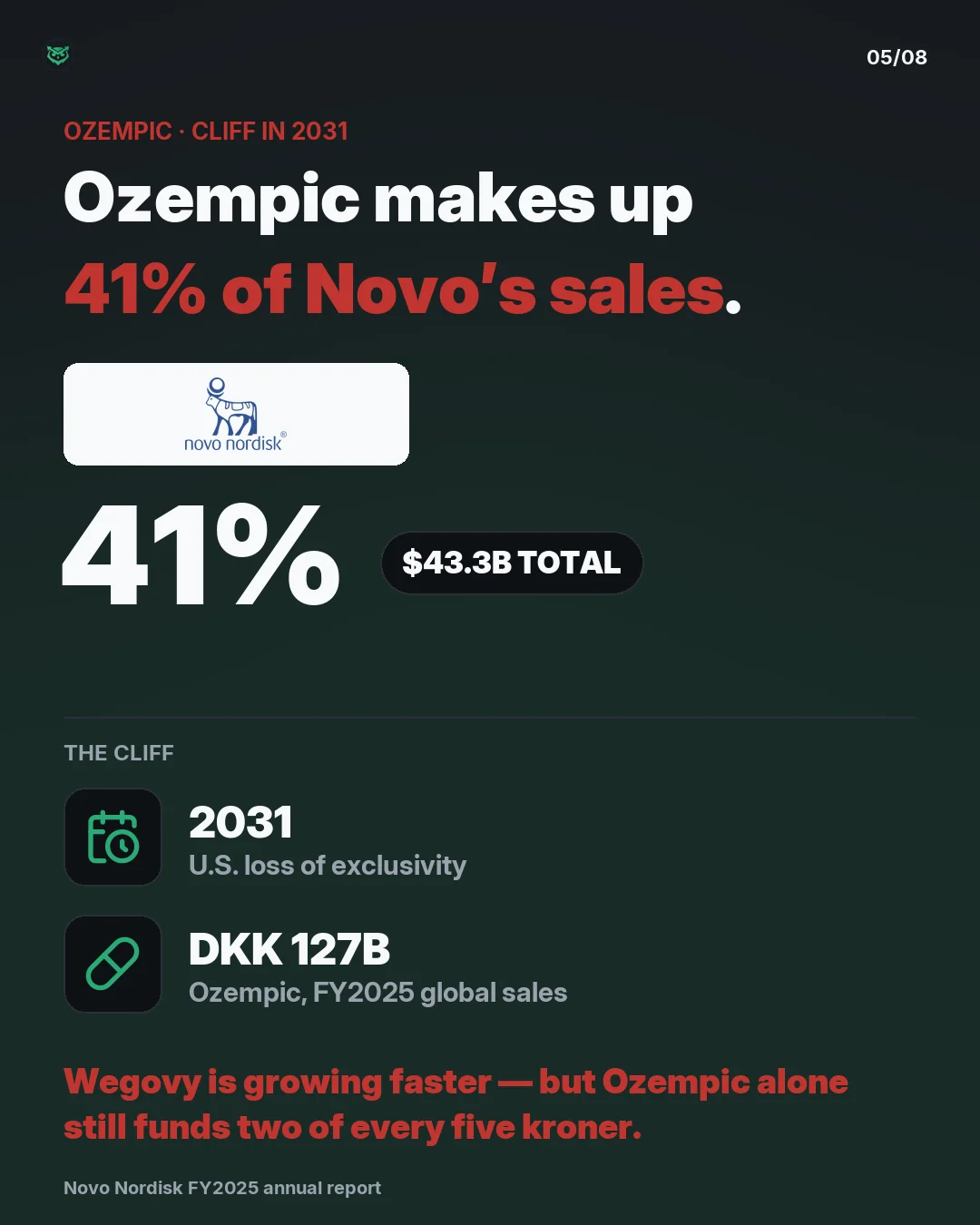
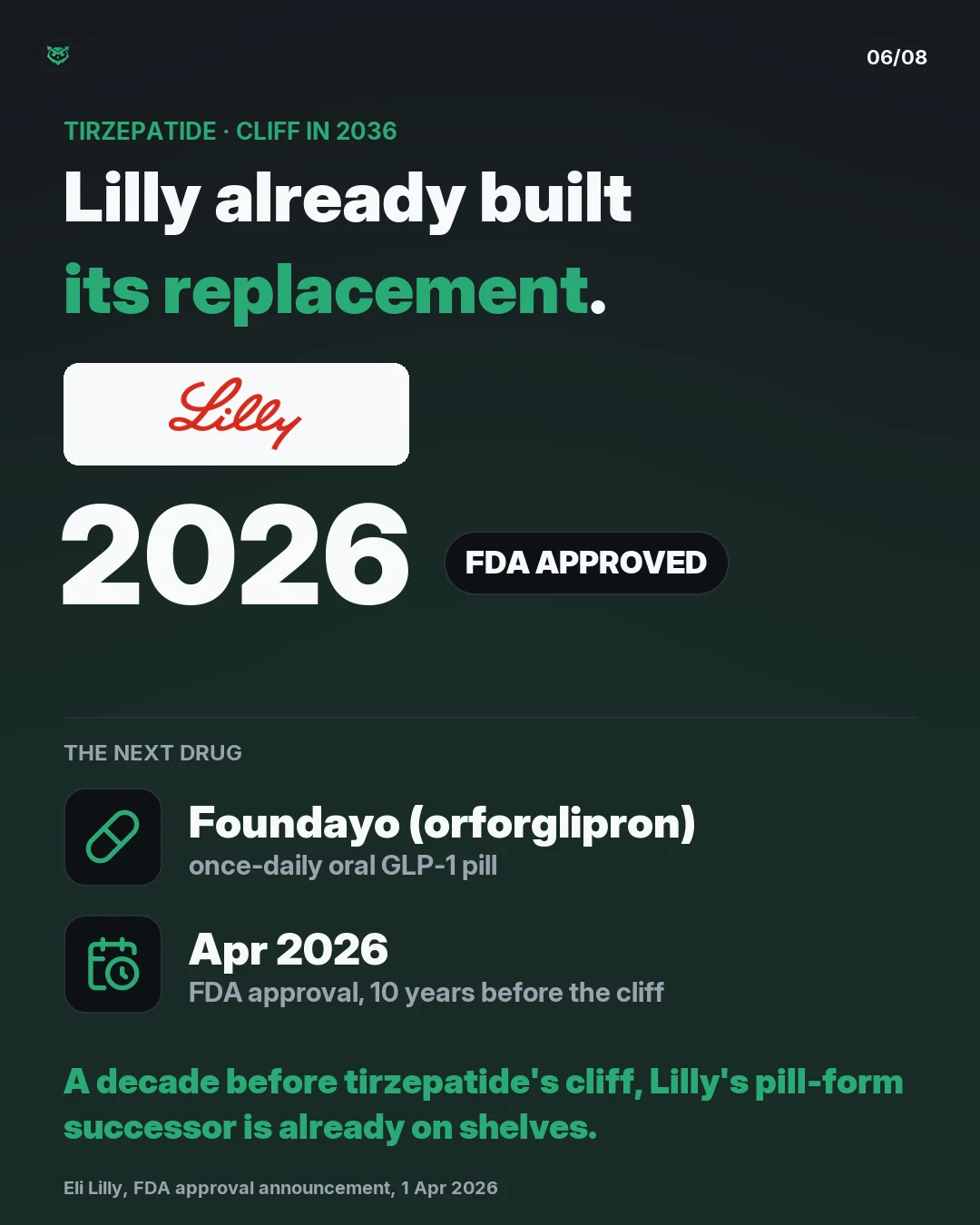
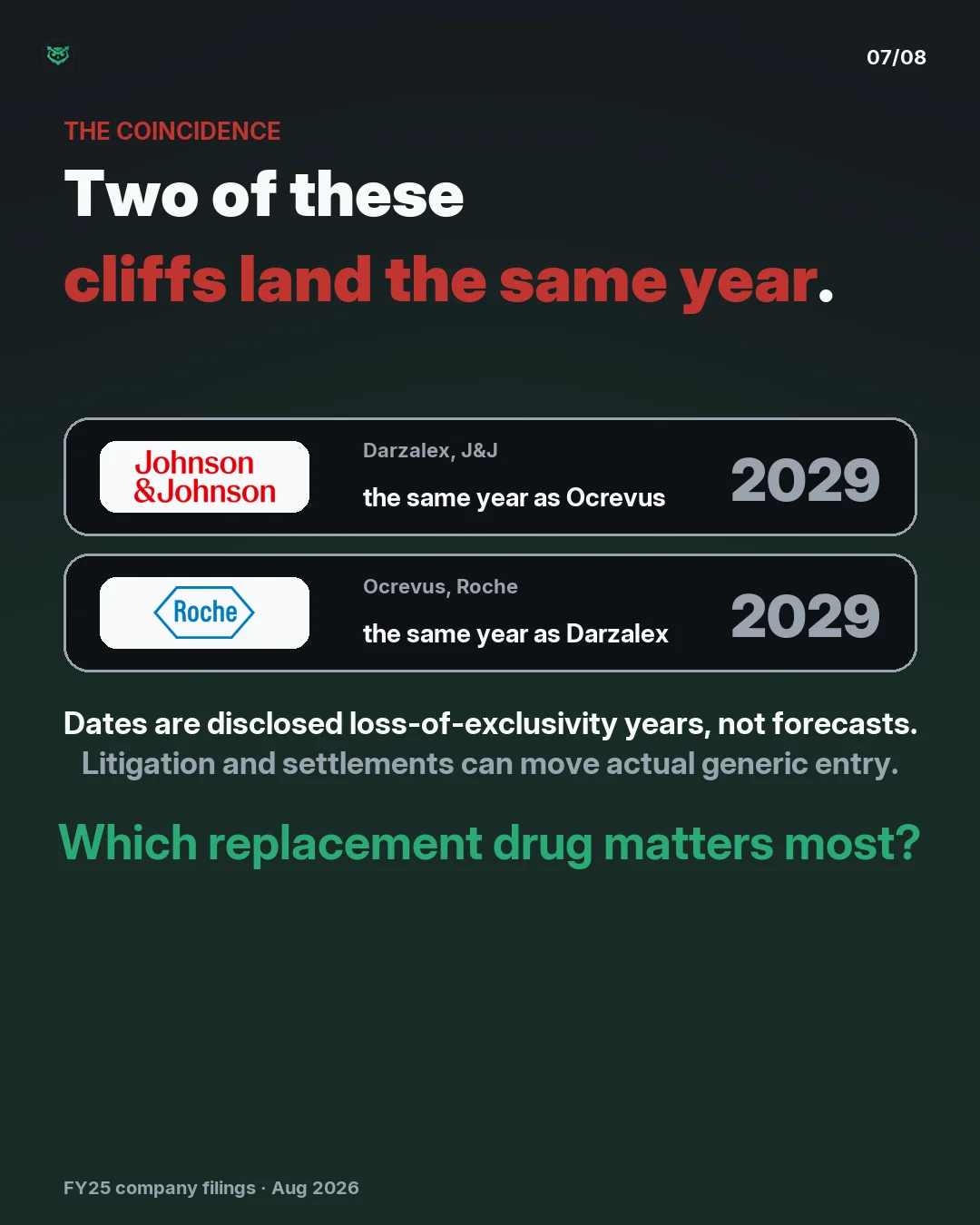
A patent cliff is the point where a blockbuster drug can face generic or biosimilar competition. It does not mean sales instantly go to zero. It means the moat gets much harder to defend.
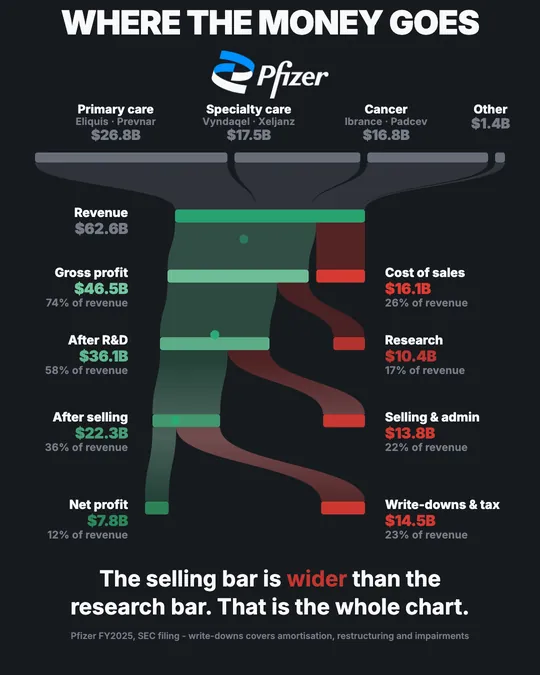
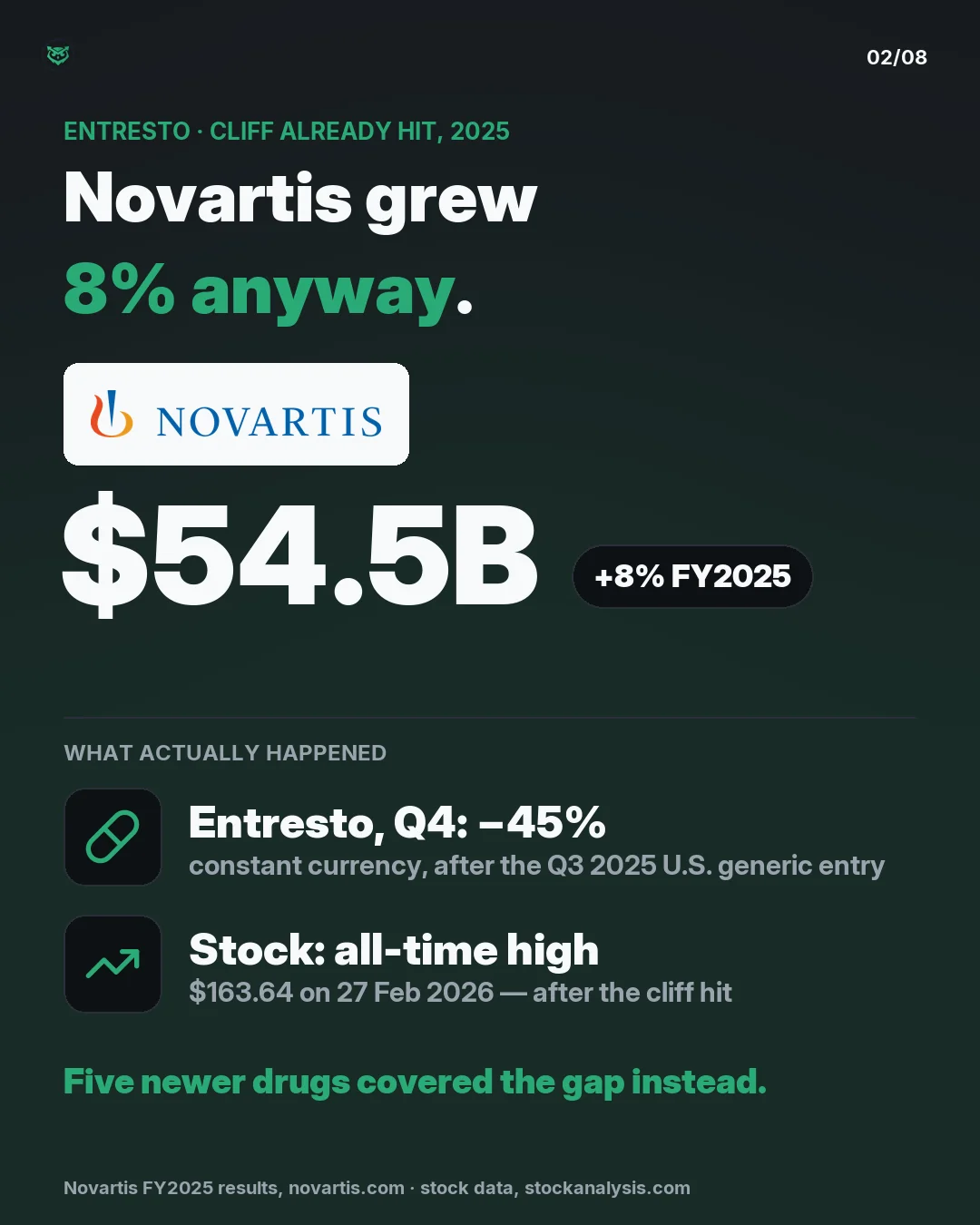
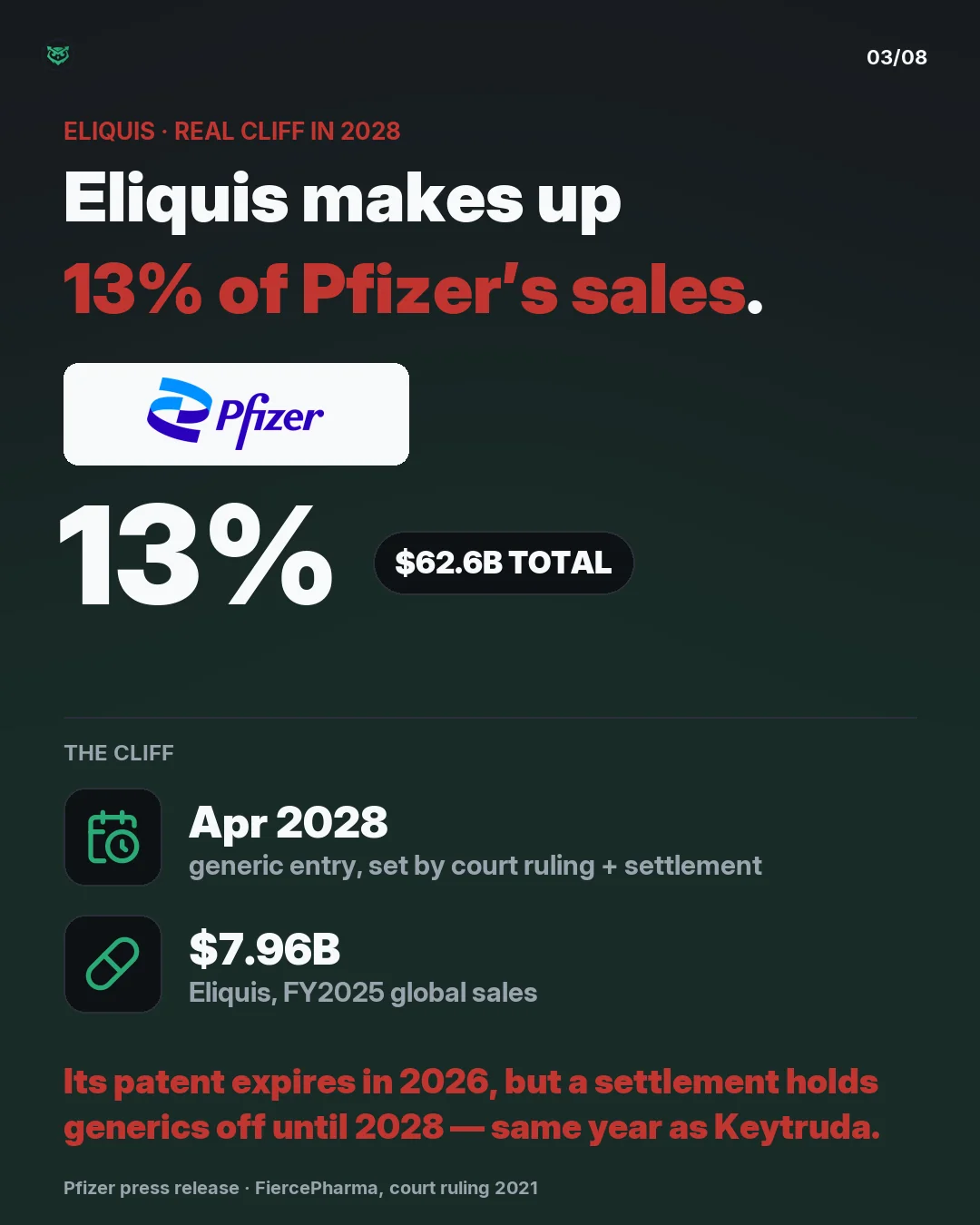
This line uses each company's biggest medicine by FY2025 sales and the closest disclosed U.S. loss-of-exclusivity or core-patent date: Novartis/Entresto 2025; Pfizer/Eliquis 2026; Merck/Keytruda 2028; Johnson & Johnson/Darzalex 2029; Roche/Ocrevus 2029; Novo Nordisk/Ozempic 2031; AbbVie/Skyrizi 2033; Eli Lilly/tirzepatide 2036.
The green sales figures are FY2025 worldwide medicine sales, rounded to the nearest $1B. Companies report in different currencies, so Novartis, Roche and Novo Nordisk figures are converted to USD and rounded; tirzepatide combines Mounjaro and Zepbound. At roughly $38B against Lilly's FY2025 revenue, tirzepatide is about 60% of company sales.
Dates are not guarantees. Patent families can contain later claims, and litigation, regulatory exclusivity and settlements can move actual generic or biosimilar entry. The chart therefore shows the disclosed cliff date, not a sales forecast.
Sources: company FY2025 annual reports and product-sales disclosures, including Pfizer's 2025 Form 10-K (Eliquis global revenue $7.961B); company patent/exclusivity disclosures. Not financial advice.